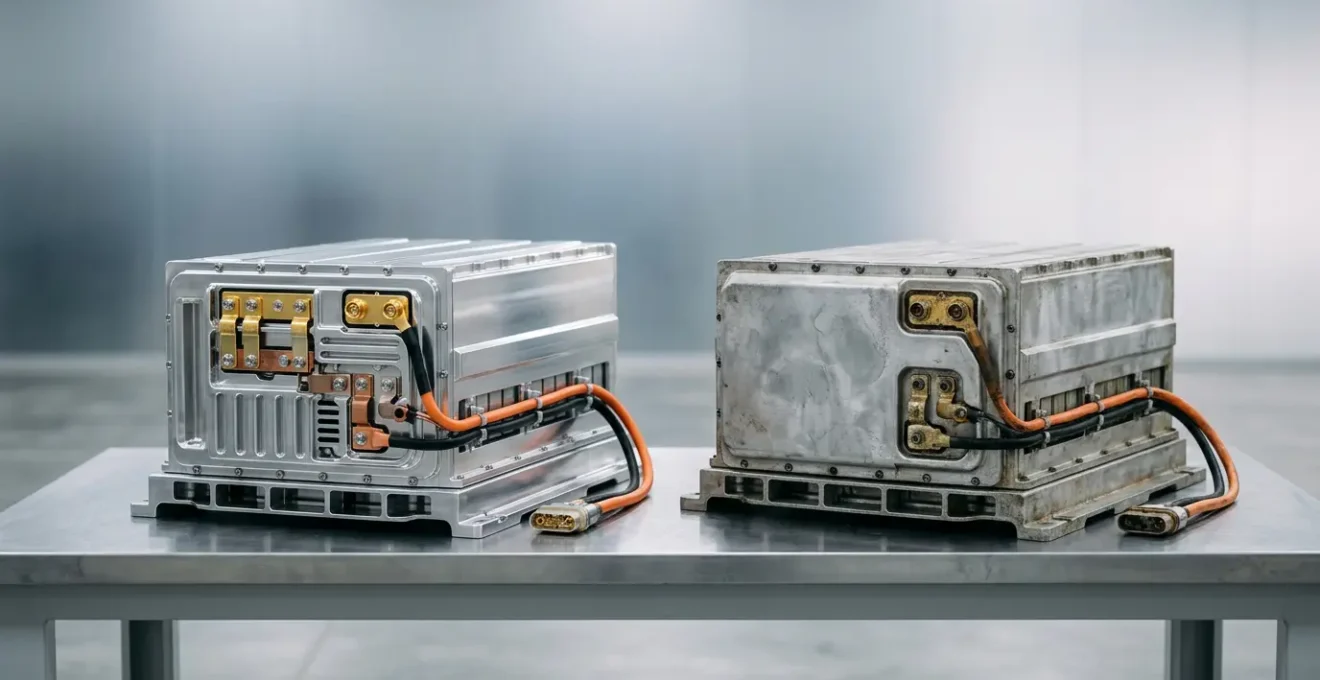
The vast difference in EV battery lifespan isn’t luck, but a direct result of understanding and managing specific electrochemical stresses.
- Battery chemistry (LFP vs. NMC) and the quality of the thermal management system are the most significant hardware differentiators determining long-term durability.
- Your daily habits—especially avoiding charging at extreme temperatures and limiting the time spent at a 100% state of charge—have a cumulative, measurable impact on battery health.
Recommendation: Treat your battery like the engineered system it is by learning to control its key stress factors, rather than following generic rules of thumb.
For any prospective or current electric vehicle owner in the UK, the question of battery longevity looms large. It’s the nagging doubt that surfaces when the estimated range dips on a cold morning, accompanied by the fear of a five-figure replacement cost. You hear the common advice: don’t fast charge too often, try to keep the battery between 20% and 80%, and be mindful of the weather. While these tips hold a kernel of truth, they barely scratch the surface.
These rules of thumb treat the battery like a mysterious black box. The reality, from an engineering perspective, is far more nuanced and, importantly, far more manageable. The disparity between a battery that retains over 90% of its capacity and one that struggles at 70% after 100,000 miles isn’t a lottery. It is the direct, predictable outcome of a vehicle’s specific engineering—its battery chemistry and thermal management system—combined with how an owner manages key electrochemical stresses like voltage, temperature, and current.
But what if the key to unlocking a decade of reliable performance wasn’t about following rigid, inconvenient rules, but about understanding the ‘why’ behind them? This article moves beyond the platitudes to give you a battery systems engineer’s perspective. We will dissect the fundamental reasons for battery degradation, empowering you to make informed decisions that actively preserve your vehicle’s most valuable component. We will break down exactly how your charging habits, the climate, and even your driving style interact with the battery’s core chemistry and systems to determine its long-term State of Health (SoH).
This comprehensive guide will walk you through the critical factors that determine the health and lifespan of your EV battery. By understanding the engineering principles at play, you can adopt strategies that significantly extend the value and performance of your electric vehicle.
Contents: Understanding the Variance in EV Battery Longevity
- Why Charging to 100% Every Night Shortens Your Battery Life by 10%?
- How to Check Your EV Battery Health Percentage Using Your Phone App?
- 8-Year Warranty or 100,000 Miles: What Your EV Battery Warranty Really Guarantees?
- Why Parking Your EV in Direct Summer Sun Causes Measurable Battery Damage?
- When to Pre-Condition Your Battery: The Cold Weather Charging Rule That Adds Years?
- Why Does One-Pedal Driving Add 15% to Your Usable Range in Urban Traffic?
- Why Your EV Shows 250 Miles but Delivers Only 180 in a British Winter?
- How Do Some EV Drivers Get 300 Miles From a Battery Rated at 250?
Why Charging to 100% Every Night Shortens Your Battery Life by 10%?
The common advice to limit charging to 80% is rooted in the fundamental chemistry of the most prevalent EV batteries. For chemistries like Nickel Manganese Cobalt (NMC), which are used in many popular EVs, holding the battery at a high state of charge (SoC)—especially 100%—places the cathode under significant electrochemical stress. At this high voltage, a process called parasitic reaction accelerates, leading to a permanent loss of lithium ions and a gradual degradation of the cathode material itself. Think of it like holding a rubber band fully stretched for an extended period; it eventually loses some of its elasticity.
However, this « rule » is not universal and highlights how crucial battery chemistry is. A fascinating case study reported by InsideEVs looked at a Tesla Model Y with a Lithium Iron Phosphate (LFP) battery that was used as a taxi. After 111,000 miles of almost exclusive DC fast charging, it retained an exceptional 92% State of Health (SoH). This is because LFP chemistry is inherently more stable at high voltages. Its chemical structure is more robust, making it far more tolerant to frequent 100% charges. In fact, many manufacturers of LFP-equipped cars recommend charging to 100% regularly to help the Battery Management System (BMS) calibrate itself.
The 10% degradation figure is an average; the real impact is a function of chemistry, time spent at high voltage, and temperature. For an NMC battery, repeatedly charging to 100% and leaving it overnight, especially in warm weather, will absolutely accelerate degradation compared to stopping at 80% or 90%. For an LFP battery, the effect is negligible. This is a prime example of why understanding your specific vehicle’s engineering is more valuable than following generic advice.
How to Check Your EV Battery Health Percentage Using Your Phone App?
Most EV owners equate the mileage estimate shown on their dashboard or phone app with battery health. This is a critical misunderstanding. The range figure is a State of Charge (SoC) estimate, akin to a fuel gauge, which is heavily influenced by recent driving style, temperature, and planned routes. Your battery’s true long-term health is measured by its State of Health (SoH), which is its current maximum capacity compared to its original capacity when new. Unfortunately, most manufacturer apps do not display this crucial SoH percentage directly.
The app shows you a prediction, not a diagnosis. To get a true measure of SoH, more advanced methods are required. Some vehicles may have a hidden service menu that displays it, but this is rare. The most reliable method for a consumer is to use an external diagnostic tool. This typically involves an OBD2 (On-Board Diagnostics) dongle that plugs into the car’s diagnostic port, which then communicates with a specialised smartphone app like Car Scanner or A Better Routeplanner (ABRP).
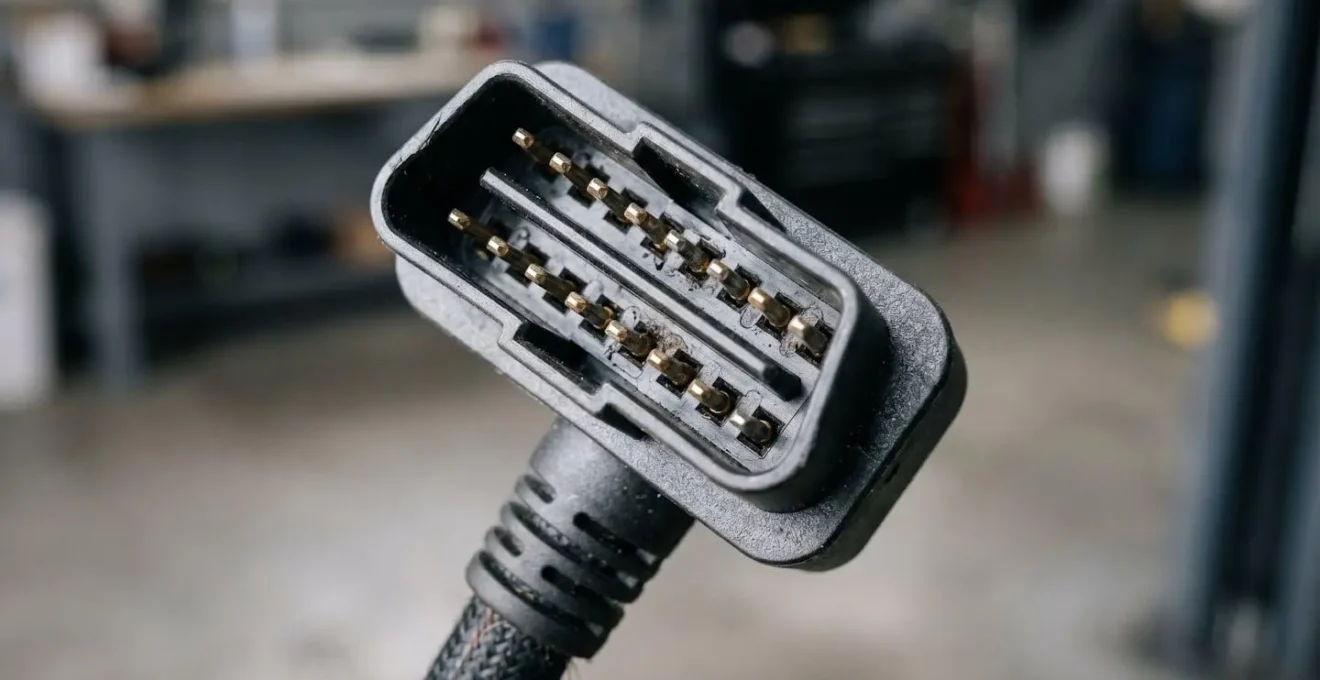
As the image shows, the OBD2 port provides a direct data link to the vehicle’s core systems. Through this connection, these apps can query the Battery Management System (BMS) directly and read raw data, including the calculated SoH percentage, individual cell block voltages, and total energy throughput. This is the only way to get a true, data-driven picture of your battery’s condition, moving beyond the fluctuating range estimates provided by standard apps. It allows you to see if all cells are balanced and identify potential issues long before they affect performance.
Action plan: Assessing a used EV’s battery health
- Points of contact: Request the seller charge to 100% and verify the displayed range. Monitor the energy consumption (kWh/mile) during a test drive via the dashboard.
- Collecte: If possible, use an OBD2 dongle with a compatible app (e.g., Car Scanner) to read direct cell data and the official State of Health (SoH) metric from the BMS.
- Cohérence: Check the raw data for significant deviations in individual cell block voltages, which point to poor balancing or module-level issues that a simple SoH percentage might hide.
- Mémorabilité/émotion: Compare the observed DC fast charging speed to the manufacturer’s original specification. A significantly slower speed (throttling) indicates the BMS is protecting a degrading battery.
- Plan d’intégration: Consolidate these findings. A low SoH, imbalanced cells, or throttled charging are all major red flags indicating accelerated degradation.
8-Year Warranty or 100,000 Miles: What Your EV Battery Warranty Really Guarantees?
The battery warranty is often cited as a primary reason for peace of mind when buying an EV. Typically offered for eight years or 100,000 miles (whichever comes first), it sounds like a comprehensive guarantee of performance. However, it’s essential to understand what this warranty actually covers. It is not a promise that your battery will perform as new for the entire period. Instead, it is a safety net against catastrophic failure or severe degradation.
Most manufacturer warranties only trigger a claim if the battery’s State of Health (SoH) drops below a specific threshold, which is commonly 70% of its original capacity. This means that if your battery has degraded to 72% capacity after seven years, it is still performing within specification and is not eligible for a warranty replacement, even if you have lost a significant amount of your original range. It is designed to protect you from a defective battery, not from the expected, gradual degradation that all lithium-ion batteries experience over time.
Comprehensive industry analysis confirms that modern EV batteries are remarkably durable. As a study highlighted by EV.com notes, current standard EV battery warranties typically cover 8 years or 100,000 miles, and it’s rare for batteries to fall below the 70% threshold during that time. The warranty provides a floor, not a ceiling, for performance. This is why understanding how to preserve your battery’s health from day one is so important; the goal should be to keep the SoH far above the 70% warranty minimum for as long as possible. As Philip Nothard, Chair of the Vehicle Remarketing Association, has stated, « Transparency will prove crucial in building future consumer confidence and dispelling the many misconceptions that have gained currency around EV batteries. »
Why Parking Your EV in Direct Summer Sun Causes Measurable Battery Damage?
Of all the factors that affect battery longevity, heat is public enemy number one. High temperatures dramatically accelerate the unwanted chemical reactions inside a battery cell that lead to permanent degradation. Parking your EV in direct sunlight on a hot summer day can cause the battery pack’s temperature to soar, even when the car is not in use. This prolonged exposure to heat causes a measurable and irreversible loss of capacity. In fact, data from Geotab’s analysis reveals that vehicles operating in hot climates see their batteries degrade faster than those in mild climates.
This is where a vehicle’s engineering, specifically its thermal management system (TMS), becomes the single most important factor. The cautionary tale of the early Nissan LEAF models serves as a critical industry lesson. These cars used a passive, air-cooled thermal management system which was inadequate in hotter climates. Without active liquid cooling to regulate the battery’s temperature, they suffered from severe and rapid degradation. Many required premature battery replacements, demonstrating the failure of a design that couldn’t cope with thermal stress.
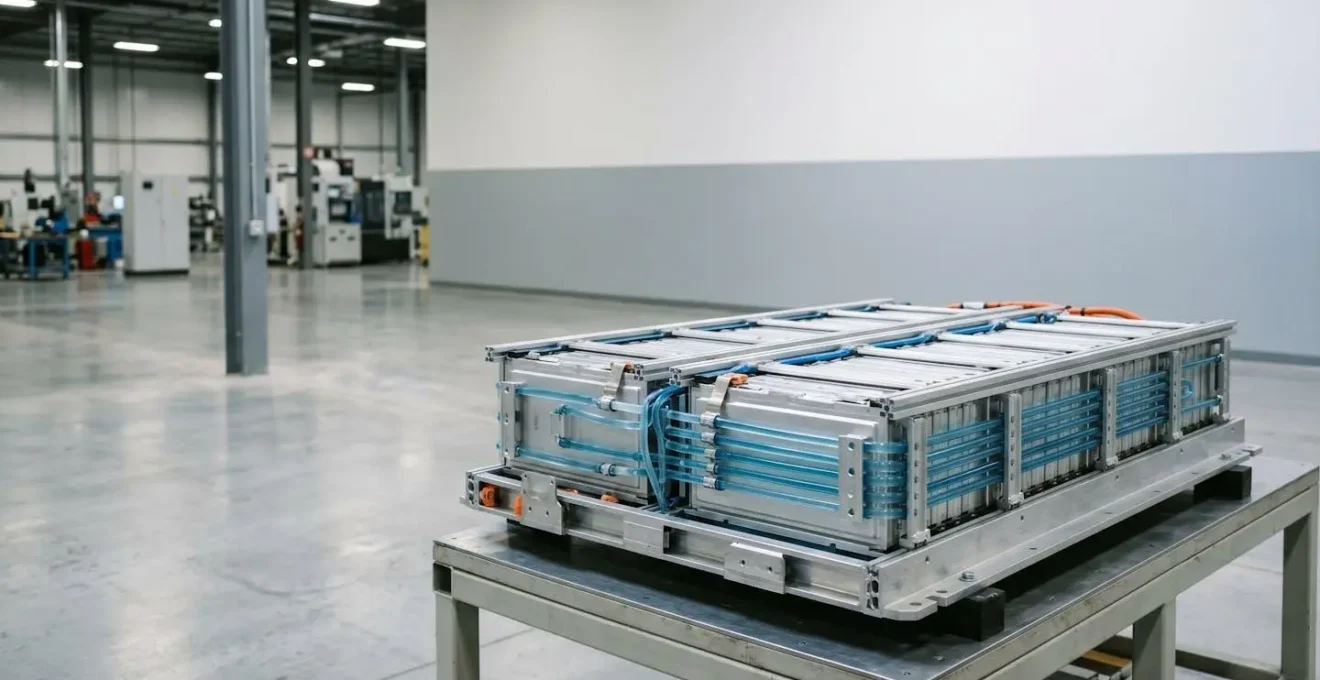
In stark contrast, modern EVs from manufacturers like Tesla, Kia, GM, and Volkswagen employ sophisticated liquid cooling systems, as depicted in the image. These systems circulate a coolant through channels within the battery pack, absorbing excess heat and dissipating it via a radiator. This active TMS can maintain the battery within its optimal temperature range (typically 20-30°C) even when the ambient temperature is high or when the battery is under heavy load from fast charging or performance driving. This single piece of technology is a primary reason why modern EVs have a much greater resilience to heat-induced degradation than their predecessors.
When to Pre-Condition Your Battery: The Cold Weather Charging Rule That Adds Years?
While heat is a well-known enemy of batteries, charging in freezing temperatures presents a more insidious danger. When you attempt to charge a lithium-ion battery that is at or below 0°C, the chemical reactions inside slow down dramatically. The lithium ions, which are supposed to move smoothly into the porous graphite anode (a process called intercalation), can no longer do so efficiently. Instead, they begin to deposit on the surface of the anode as metallic lithium. This process is called lithium plating.
Lithium plating is highly destructive. It permanently removes lithium from the battery’s cycle, causing an immediate and irreversible loss of capacity. Furthermore, these metallic deposits can grow over time, potentially piercing the separator between the anode and cathode, leading to an internal short circuit and complete cell failure. As the expert source Battery University warns, « Many battery users are unaware that consumer-grade lithium-ion batteries cannot be charged below 0°C (32°F). Although the pack appears to be charging normally, plating of metallic lithium occurs on the anode during a sub-freezing charge that leads to a permanent degradation in performance and safety. »
This is precisely why battery pre-conditioning is such a crucial feature for EV owners in cold climates like the UK. When you schedule a departure time or navigate to a fast charger, the car’s thermal management system actively uses energy to warm the battery pack to an optimal temperature. This ensures the anode is receptive to charge, preventing lithium plating. Crucially, this allows for safe and rapid charging even in frigid conditions. As research published in PNAS demonstrates, lithium plating is a major degradation factor at 0°C, whereas pre-heating enables safe charging and preserves battery life. Ignoring pre-conditioning and repeatedly plugging into a fast charger with a frozen battery is one of the quickest ways to destroy its capacity.
Why Does One-Pedal Driving Add 15% to Your Usable Range in Urban Traffic?
One-pedal driving, where lifting off the accelerator engages strong regenerative braking, is often promoted as a key feature for extending EV range. In stop-and-go urban traffic, it excels at this by recapturing kinetic energy that would otherwise be wasted as heat in conventional friction brakes. By consistently converting the car’s momentum back into electricity, it can significantly reduce net energy consumption, and a figure of 15% range extension in these specific conditions is plausible. However, from a battery health perspective, the story is more nuanced.
Maximum regenerative braking involves pushing a high electrical current back into the battery. This high charge rate (C-rate) creates heat and places stress on the battery’s chemistry, similar in nature (though usually lower in magnitude) to DC fast charging. While occasional high-regen events are harmless, relying exclusively on aggressive one-pedal driving for all braking might not be the optimal strategy for long-term battery preservation. It’s a trade-off between maximum immediate energy recovery and minimising long-term battery stress.
A more sophisticated approach involves using the vehicle’s adjustable regenerative braking settings to match the driving conditions and prioritise battery health. Here is a more strategic way to think about regenerative braking:
- Experiment with your vehicle’s different regenerative braking settings to find the optimal balance between energy recuperation and battery stress.
- Consider using ‘low’ or ‘adaptive’ regen modes during daily driving to minimize high-current charging events that create heat and stress similar to DC fast charging.
- Reserve ‘high’ or ‘one-pedal’ mode for situations where maximum energy recovery is critical, such as long hill descents or heavy city traffic where frequent, predictable stops are necessary.
- Be aware that regenerative braking effectiveness is naturally reduced when the battery is nearly full (over 90% SoC) as there is no capacity to accept more charge, or when the battery is very cold, as it cannot accept a high charge rate safely.
- Use pre-conditioning features before a winter drive to bring the battery to its optimal temperature, which enables full regenerative braking efficiency from the start of your journey.
Thinking like an engineer means seeing one-pedal driving not as a simple on/off feature, but as a tool to be used intelligently. The goal is to balance efficiency with the preservation of the battery system.
Why Your EV Shows 250 Miles but Delivers Only 180 in a British Winter?
The dramatic drop in range during a cold British winter is one of the most common and frustrating experiences for an EV driver. This isn’t a sign of a faulty battery but a direct consequence of two core physics principles. First, the electrochemical reactions inside the battery slow down in the cold, increasing internal resistance and making it harder to extract energy. This alone can reduce effective range. Second, and more significantly, is the immense energy required for cabin heating.
Unlike an internal combustion engine which produces vast amounts of waste heat perfect for warming the cabin, an EV motor is extremely efficient and produces very little. Therefore, the heat for you and your passengers must be generated using precious energy from the main battery. The impact of this is not trivial. In fact, comprehensive testing by AAA reveals that while 20°F (-6.7°C) weather alone might reduce range by around 12%, using the in-vehicle climate control can amplify that range loss to as much as 40%. The 250-mile car becoming a 180-mile car is a direct result of the battery having to do two jobs: propel the car and run an electric heater.
This is another area where a car’s specific engineering makes a huge difference. Older or more basic EVs use a simple resistive heater, which works like a toaster element—it’s effective but very energy-intensive. More advanced EVs are equipped with a heat pump. A heat pump works like a refrigerator in reverse, gathering ambient heat from the air and drive-train components and concentrating it to warm the cabin. As noted by experts at Recurrent Auto, « A modern EV with an efficient heat pump can warm the cabin using 2-3 times less energy than a car with a simpler resistive heater. » This single piece of technology is a major factor explaining why some EVs perform so much better in winter than others, directly impacting real-world usability.
Key Takeaways
- Extreme temperatures are the primary enemy: Both excessive heat (from sunlight or fast charging) and charging in sub-zero cold cause irreversible physical damage to the battery cells.
- High and low states of charge are stress states: Consistently leaving your battery at 100% or below 20% for extended periods accelerates degradation, with the specific impact depending on your battery’s chemistry (NMC vs. LFP).
- A vehicle’s engineering is paramount: The presence and quality of a liquid-based thermal management system and a heat pump are the biggest differentiators in a battery’s ability to withstand real-world conditions and retain its long-term health.
How Do Some EV Drivers Get 300 Miles From a Battery Rated at 250?
Achieving significantly more range than the official rating is not a matter of magic, but the culmination of understanding and applying every principle we’ve discussed. It is the result of a synergy between having a vehicle with robust engineering and a driver who operates it with mechanical sympathy. The drivers who achieve these « hypermiling » feats are those who minimise every source of energy loss and electrochemical stress on the battery.
Firstly, modern batteries provide a fantastic foundation. The fear of rapid degradation is largely a relic of early-generation EVs. As analysis by Recurrent of high-mileage electric vehicles shows, even after 150,000 miles, 2023 model year EVs still deliver 91% of their original capacity on average. This inherent durability means that with the right practices, the battery is more than capable of supporting optimised, high-efficiency driving for many years.
Secondly, achieving outlier efficiency is about stacking marginal gains. It involves a holistic approach that considers everything from driving style to aerodynamics and tyre pressure. No single change will add 50 miles of range, but dozens of small, conscious optimisations combine to produce a dramatic overall effect. These drivers intuitively understand how to keep the battery in its happiest state: at a stable temperature, operating at low C-rates, and avoiding electrical and aerodynamic drag. The following table breaks down some of the key factors that separate an average driver from a hypermiler.
| Optimization Category | Specific Factor | Estimated Range Impact | Difficulty Level |
|---|---|---|---|
| Driving Style | Gentle acceleration and coasting (‘sailing’) | +10-15% | Easy |
| Driving Style | Energy-neutral braking (minimal regen) | +5-8% | Medium |
| Tire Selection | Low rolling resistance tires | +3-5% | Easy |
| Tire Maintenance | Optimal pressure (weekly checks) | +2-4% | Easy |
| Weight Reduction | Remove unnecessary cargo | +1-3% | Easy |
| Aerodynamics | Aero wheel covers, remove roof racks | +3-7% | Medium |
| Climate Control | Heat pump vs. resistive heater (hardware) | +15-25% (winter) | N/A (factory) |
| Battery Management | Effective BMS and thermal system (hardware) | +5-10% | N/A (factory) |
Ultimately, the difference between 70% and 90% SoH after 100,000 miles lies in treating the battery as a complex system to be managed, not a simple tank to be filled. By applying the engineering principles of minimising thermal, voltage, and current stress, you can move from being a passive consumer to an active manager of your vehicle’s health, ensuring its performance and value for years to come.