Road Safety
Navigating modern British roads involves a complex interaction between human judgment and highly advanced vehicle technologies. While early automotive safety relied primarily on seatbelts and heavy metal frames, the current landscape of road safety encompasses a sophisticated network of predictive sensors, active interventions, and meticulously engineered structural designs. Understanding how these elements work together is no longer just for mechanics; it is essential knowledge for every driver.
Today, the difference between a near-miss and a severe collision often comes down to a split-second decision made by a vehicle’s onboard computer, or the structural integrity maintained through rigorous testing standards. From the subtle interventions of traction control on a wet roundabout to the explosive, life-saving deployment of curtain airbags, the anatomy of automotive safety has fundamentally transformed.
This comprehensive overview breaks down the core pillars of modern vehicle safety. By exploring evolving regulatory standards, crucial mechanical maintenance, advanced driver assistance systems (ADAS), and the physics of crash dynamics, drivers can make informed decisions to protect themselves, their passengers, and other road users.
The Evolution of Vehicle Safety Standards and Regulations
Vehicle safety is heavily dictated by rigorous legal requirements and consumer testing bodies. The regulatory landscape continuously adapts to introduce new mandatory safety features, which directly impacts everything from vehicle pricing to type approval.
The Reality of Crash Test Ratings
It is a common misconception that a maximum safety rating from past testing cycles guarantees the same level of protection as a maximum rating awarded under current, more stringent criteria. Independent testing bodies continually move the goalposts to drive industry innovation. Consequently, an older vehicle boasting a five-star rating might offer significantly less occupant protection than a newer model that only achieved four stars.
Current evaluations place immense weight on active safety features—systems designed to prevent accidents entirely, such as pedestrian detection and autonomous emergency braking. When reviewing safety credentials, it is crucial to look beyond the overall score and examine the structural integrity rating, which reveals how well the cabin withstands actual physical impacts.
Modifications and Type Approval
Many drivers seek to personalise their vehicles, but seemingly harmless aftermarket modifications can instantly void your vehicle’s type approval. Type approval is the regulatory mechanism ensuring a vehicle meets all safety and environmental standards before it enters the market. Alterations to the suspension height, non-standard lighting installations, or tampering with the emissions systems can render a car legally unroadworthy and invalidate insurance coverage.
Crucial Maintenance: Tyres and Braking Systems
Even the most advanced autonomous safety systems rely entirely on the vehicle’s physical connection to the road. Neglecting basic maintenance fundamentally undermines a car’s ability to steer and stop effectively.
Tyre Pressure Dynamics
Tyres are the only point of contact between a vehicle and the tarmac, yet they are frequently neglected. A subtle drop in pressure can drastically alter handling characteristics and increase running costs. Think of a tyre like a tightly inflated balloon in a warm room; if you move that balloon to a cold environment, it visually shrinks as the air condenses. Similarly, tyres naturally lose around 3 PSI every autumn simply due to dropping ambient temperatures, without any punctures present.
Running a vehicle consistently under-inflated carries several hidden penalties:
- Increased rolling resistance, which can cost hundreds of pounds in extra fuel annually.
- Accelerated and uneven edge wear, necessitating premature tyre replacement.
- Extended braking distances, particularly dangerous on wet or icy roads.
- Reduced effectiveness of electronic stability control during emergency manoeuvres.
Brake System Health and MOT Failures
Braking systems are arguably the most critical active safety component, yet they account for a substantial percentage of annual MOT failures in the UK. Many drivers wait for the ominous metal-on-metal scraping sound before seeking professional attention, by which point the braking efficiency is dangerously compromised and repair costs have multiplied.
To maintain optimal braking performance, drivers must be vigilant about the following components:
- Brake Pads: The friction material that grips the disc. Wear rates vary wildly from a few thousand to tens of thousands of miles depending on driving style and urban versus motorway usage.
- Brake Discs: The metal rotors that can warp or score over time, causing steering wheel vibrations under heavy braking.
- Brake Calipers: The housing that squeezes the pads. A seized caliper can cause dangerous pulling to one side during emergency stops.
- Brake Fluid: A hydraulic liquid that absorbs moisture over time, lowering its boiling point and causing a spongy pedal feel on long descents.
Navigating Advanced Driver Assistance Systems (ADAS)
The transition from analogue driving to computer-assisted motoring has introduced a steep learning curve. ADAS features are designed to mitigate human error, but they require the driver to understand their limitations and operational parameters.
Traction Control and Stability
Traction control and Electronic Stability Programs (ESP) are silent guardians on British roads. They continuously monitor wheel speed and steering angle, applying individual brakes or cutting engine power the moment a loss of grip is detected. This technology is credited with saving countless lives, particularly when navigating wet, greasy roundabouts where a car might otherwise hesitate or spin. While there are specific, low-speed scenarios where disabling traction control is beneficial—such as rocking a vehicle out of deep snow or mud—it should remain active for all standard driving conditions.
Adaptive Cruise Control and Emergency Braking
Adaptive Cruise Control (ACC) transforms motorway driving by maintaining a pre-set distance from the vehicle ahead. However, selecting the appropriate gap setting is vital; the closest setting may be suitable for slow, crawling traffic on the M1, but it fundamentally fails to provide a safe stopping distance at motorway speeds.
Similarly, Autonomous Emergency Braking (AEB) systems act as a final safety net. These systems use radar and cameras to detect imminent collisions and apply maximum braking force if the driver fails to react. It is important to note that these delicate sensors require precise recalibration after routine maintenance, such as a windscreen replacement, to prevent phantom braking incidents or total system failure.
Lane Keeping and Semi-Autonomous Driving
Lane assistance technologies often struggle with the unique characteristics of British infrastructure. While flawless on freshly painted motorways, these systems can become dangerously unreliable and beep aggressively on narrow, winding B-roads with faded lines or overgrown verges. Drivers must remember that current Level 2 autonomy mandates that hands remain on the steering wheel at all times; the human driver retains ultimate legal and moral responsibility for the vehicle’s trajectory.
Passive Safety: What Happens During a Collision?
When an accident becomes unavoidable, passive safety systems activate in milliseconds to absorb kinetic energy and shield the occupants from lethal forces.
Crumple Zones and Structural Integrity
Modern vehicles are designed to sacrifice themselves to save their occupants. It can be alarming to see a newer car look completely obliterated after a moderate-speed impact, but this is a deliberate engineering triumph. The front and rear sections act as crumple zones, folding like an accordion to absorb and dissipate the crash energy before it reaches the reinforced passenger cabin.
During a severe frontal collision, specific design features come into play:
- The engine block is engineered to drop downwards, preventing it from being pushed into the driver’s footwell.
- The bonnet buckles at predetermined points to minimise the severity of pedestrian impacts.
- High-strength steel door beams prevent side-intrusion, ensuring the cabin remains an intact survival cell.
Advanced Airbag Deployment
The evolution from a single steering-wheel airbag to a comprehensive network of up to twelve airbags represents a monumental leap in occupant protection. Modern systems calculate the severity of the impact, deploying airbags gently in low-speed shunts and explosively in high-speed crashes. Curtain airbags drop from the roofline to prevent head trauma against shattered glass during side impacts or rollovers. Crucially, the effectiveness of airbags is entirely dependent on the occupants sitting at a safe distance from the dashboard and correctly wearing their seatbelts.
The Human Element in Modern Driving
Despite the proliferation of digital safety nets, human behaviour remains the ultimate determining factor in road safety. The design of vehicle interiors and how drivers interact with them can inadvertently create new hazards.
The automotive industry’s shift towards minimalist interiors has seen physical buttons replaced by complex touchscreen menus. Adjusting the climate control via a touchscreen can take significantly longer and demand more visual concentration than turning a tactile dial, subtly increasing the risk of distraction-related accidents. Taking the time to configure settings and learn the interface whilst parked is a simple habit that greatly enhances on-road safety.
Furthermore, physical hazards within the cabin and on the exterior must not be overlooked. Securing cargo is a legal imperative; an unsecured load can result in severe financial penalties and points on a driver’s licence. Even interior accessories require scrutiny—using uncertified, poorly fitting floor mats can jam behind the accelerator or brake pedals, leading to catastrophic loss of control. Ultimately, road safety is a continuous partnership between the vehicle’s engineering brilliance and the driver’s diligent oversight.

Why Does Your Lane Warning Beep Constantly on Narrow British B-Roads?
Your car’s lane assist isn’t faulty; it’s a simple machine whose rigid logic conflicts with the intuitive driving style necessary for narrow UK B-roads. Motorway-designed systems rely on clear, consistent…
Lire la suite
Why Does Your Car Have 12 Airbags: An Engineer’s Guide to Modern Safety Systems
The massive increase in airbags isn’t about adding more padding; it’s about creating a sophisticated, intelligent system that tailors its response to the specific severity and type of a crash….
Lire la suite
The Engineer’s View: Why Your Car’s Bonnet Buckles on Purpose During Pedestrian Impacts?
Modern car safety is not about brute strength, but about the masterfully engineered choreography of controlled failure. The front and rear of a car are sacrificial structures, designed to crumple…
Lire la suite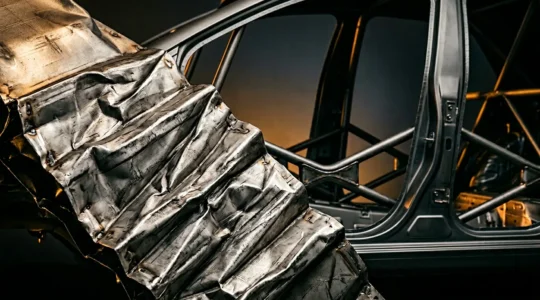
Why Did Your Car’s Cabin Stay Intact While the Front Crumpled Beyond Recognition?
Contrary to what it looks like, a car that crumples catastrophically in a crash is performing exactly as designed. The destruction is not a sign of weakness, but of a…
Lire la suite
Why Did Your Car Brake Without Warning and Potentially Save Your Life?
That sudden, uncommanded braking wasn’t a fault; it was your car’s digital co-pilot making a calculated, life-saving decision based on a high-speed data conversation. Proactive systems constantly measure ‘Time-to-Collision’ and…
Lire la suite
Why Did That Driver Crash Despite Having Autopilot: Understanding the Human Responsibility?
Driver-assist systems don’t make driving easier; they change your job from an active operator to a vigilant system supervisor—a role requiring different, often more intense, focus. Level 2 systems, like…
Lire la suite
Why Do Some Brake Pads Last 25,000 Miles While Others Fail at 8,000?
The vast difference in brake pad life isn’t random; it’s governed by the physics of heat management and material science. Driving environment is the single biggest factor; one city mile…
Lire la suite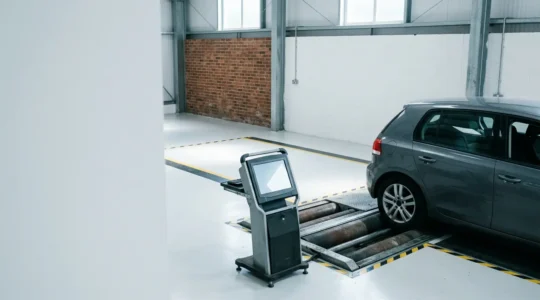
Why Do MOT Testers Fail 12% of UK Vehicles for Brake Defects Alone?
The MOT brake test isn’t about how new your parts are; it’s about detecting the systemic imbalances and hidden corrosion that lead to a fail certificate. Failures are often caused…
Lire la suite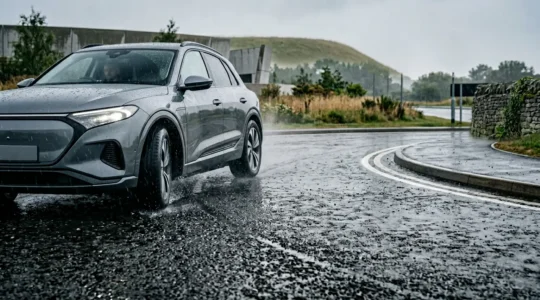
The Unseen Engineer: Why Traction Control is Your Most Important Co-Pilot on Wet UK Roads
That unnerving hesitation from your car when accelerating on a wet roundabout isn’t a fault; it’s the most critical moment of a life-saving intervention. Many drivers mistake this calculated power…
Lire la suite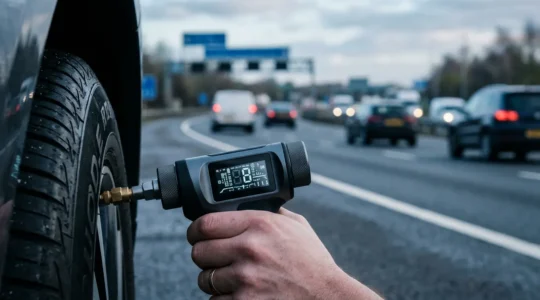
The £200 Tyre Pressure Mistake: Why 5 PSI Under-Inflation is Costing You Dearly
That 5 PSI drop in your tyres isn’t just a safety warning; it’s a direct £200 annual financial leak from your bank account. Your tyres naturally lose pressure as the…
Lire la suite