True zero-emission transport is a systems engineering challenge, not a vehicle purchasing decision.
- The significant « carbon debt » from EV manufacturing must be managed through vehicle longevity and genuinely renewable charging.
- Real neutrality requires scrutinising offsets for permanence and additionality, while prioritising modal shifts and operational efficiency to avoid emissions in the first place.
Recommendation: Shift focus from vehicle-level metrics to a holistic lifecycle assessment of your entire mobility footprint.
So, you’re committed to a zero-emission transport strategy. The first, most visible step seems obvious: replace the internal combustion engine (ICE) vehicle with a battery electric vehicle (EV). This like-for-like swap is the headline act of the green transport transition, championed by governments and manufacturers alike as the primary path to decarbonisation. It is a necessary step, but it is far from the complete picture.
Focusing solely on the tailpipe obscures a complex system of hidden emissions and missed opportunities. What if that brand-new EV has already generated tonnes of CO2 before its first journey? What if your « green » electricity isn’t as clean as you think? And what if the most profound emission reductions have nothing to do with the vehicle at all? The path to authentic, verifiable zero emissions requires a radical shift in thinking: from swapping products to re-engineering processes.
This article will guide you through that systemic shift. We will dismantle the hidden carbon costs, scrutinise the energy supply chain, and explore operational strategies that deliver far greater impact than a simple vehicle upgrade. It’s time to move beyond the easy answer and build a transport strategy that is truly zero-emission, from cradle to grave.
This article provides a holistic framework for understanding and implementing a true zero-emission transport strategy. Below is a summary of the key areas we will explore to move beyond simplistic solutions and toward systemic decarbonisation.
Summary: A Systemic Approach to Zero-Emission Transport
- Why a New EV Creates 10 Tonnes of CO2 Before It Even Drives a Mile?
- How to Ensure Your EV Is Charged by 100% Renewable Electricity at Home?
- Walking, Cycling, e-Bike, or EV: Which Zero-Emission Mode Fits Your 5-Mile Commute?
- The Carbon Offset Programme That Does Not Actually Neutralise Your Fleet Emissions
- When to Replace Each Fleet Vehicle: The 7-Year Roadmap to Zero Emissions?
- How Much CO2 Reduction Can You Report by Switching 30% of Road Miles to Rail?
- How Combining 3 Short Errands Into 1 Trip Saves 40% of the Fuel Used?
- Why Do Some Drivers Get 60 MPG in a Car Rated for 45 While Others Get 35?
Why a New EV Creates 10 Tonnes of CO2 Before It Even Drives a Mile?
The term « zero-emission vehicle » is a misnomer that narrowly focuses on tailpipe emissions while ignoring the significant environmental cost of manufacturing. Every new vehicle, including an EV, begins its life with a substantial « carbon debt » or embodied carbon. This is the total greenhouse gas (GHG) emissions generated during the extraction of raw materials, processing, and assembly. For EVs, the primary source of this debt is the energy-intensive production of the lithium-ion battery.
While an ICE vehicle’s manufacturing footprint is smaller, its lifetime emissions quickly surpass an EV’s. However, understanding the initial carbon debt is critical for a true zero-emission strategy. Recent research shows that manufacturing a new electric SUV in 2024 can create around 12 tonnes of CO2e, compared to 8 tonnes for its petrol equivalent. This upfront emission cost must be « paid back » through zero-emission driving over the vehicle’s life.
Case Study: The Carbon Payback Period
Lifecycle analysis from platforms like Recurrent Auto demonstrates this payback dynamic. An EV charged on a grid with high renewable penetration (like Norway’s hydropower) can offset its manufacturing carbon debt in as little as one year compared to an ICE vehicle. On a more carbon-intensive grid, this period may extend, but the EV still results in significantly lower lifetime emissions. The key takeaway is that an EV is not inherently « zero-emission » from day one; it is a tool for decarbonisation whose effectiveness depends on its operational context and longevity.
Therefore, a holistic strategy does not simply promote buying new EVs. It prioritises maximising the lifespan of existing EVs to amortise their embodied carbon over the longest possible period and carefully times the replacement of legacy vehicles to optimise the lifecycle benefits. Simply replacing a low-mileage, functional ICE vehicle with a new EV may not be the most carbon-efficient decision in the short term.
How to Ensure Your EV Is Charged by 100% Renewable Electricity at Home?
An electric vehicle is only as clean as the electricity used to power it. Plugging into a standard national grid, which may still rely heavily on fossil fuels, significantly undermines the « zero-emission » claim. Achieving true operational zero requires a deliberate and verifiable strategy for sourcing 100% renewable electricity for every charge.
The most direct method is to pair your EV charger with a home-based renewable generation system, such as rooftop solar panels. This creates a closed-loop system where you generate, store (potentially in a home battery or the EV itself), and consume your own clean energy. However, simply having solar panels is not enough. A truly systemic approach involves smart charging technology that aligns charging times with periods of maximum solar generation or off-peak grid times when renewable penetration is highest.
This leads to the concept of Vehicle-to-Grid (V2G) technology, a cornerstone of a future intelligent energy system. This system allows your EV to not only draw power from the grid but also feed it back during peak demand, acting as a distributed battery to help stabilise the grid and better integrate intermittent renewables like wind and solar.
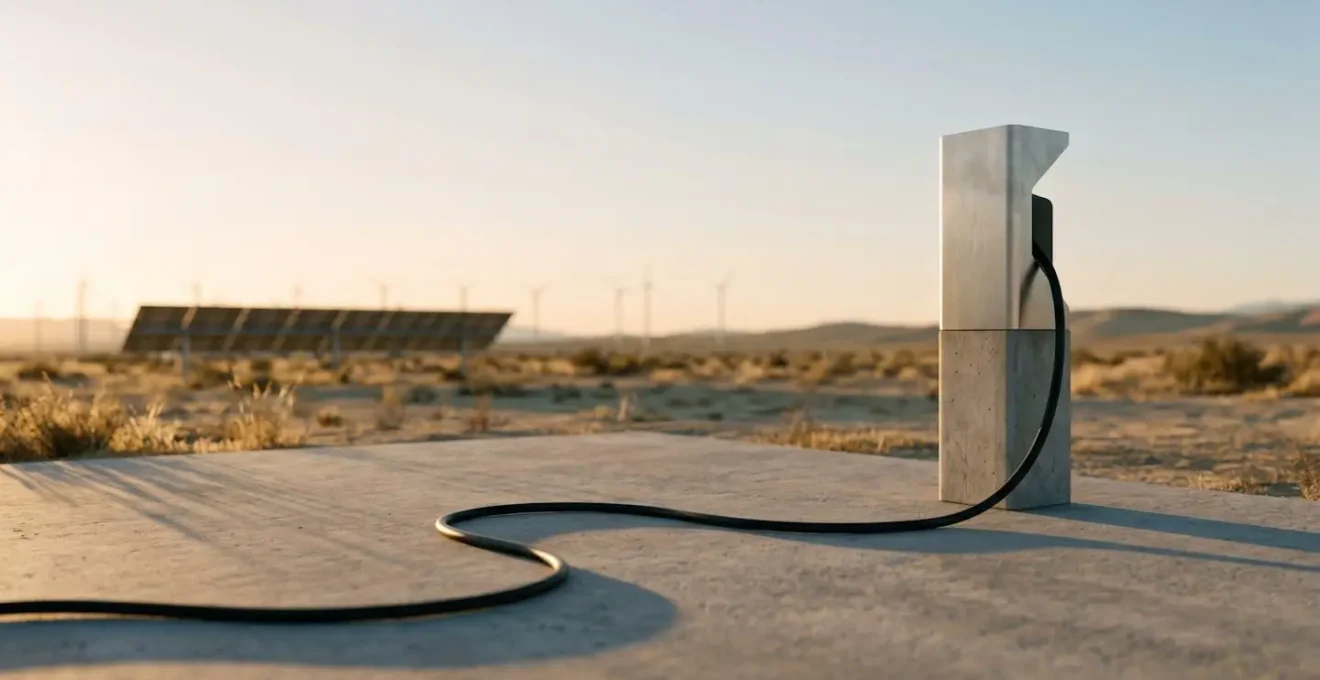
As the illustration suggests, the EV becomes an integral part of the energy ecosystem. With industry projections indicating 250 million EVs globally by 2030, these vehicles represent a vast, decentralised energy storage network. For a UK business or individual, this means selecting V2G-compatible vehicles and chargers is a future-proofing strategy that moves beyond being a passive energy consumer to an active participant in the energy transition.
Walking, Cycling, e-Bike, or EV: Which Zero-Emission Mode Fits Your 5-Mile Commute?
A truly systemic approach to zero emissions questions the default use of a car for every journey. The most effective form of emission reduction is avoidance. This means implementing a strategy of « modal optimisation »—consciously selecting the most efficient and appropriate mode of transport for each specific trip. For the common 5-mile commute, a multi-tonne EV is often a grossly inefficient tool for moving a single person.
The hierarchy of modal choice for short distances should be:
- Walking: For very short trips (e.g., under 1.5 miles), it is the undisputed champion of zero-emission, low-cost, and health-beneficial transport.
- Cycling (Acoustic & Electric): For distances up to 5-10 miles, cycling is exceptionally efficient. An e-bike flattens hills and extends range, making it a viable car replacement for many commutes without the physical barrier of a traditional bike. The embodied carbon of a bicycle or e-bike is a tiny fraction of that of an EV.
- Public Transport: Where available, high-occupancy buses and trains offer a significantly lower per-person carbon footprint than individual car travel, even when the car is electric.
- Electric Vehicle: The EV should be the choice when other modes are impractical due to distance, weather, the need to transport goods, or mobility limitations. It is the solution for the journeys that remain after optimising for other modes, not the default for all of them.
While all these options have zero tailpipe emissions, their lifecycle emissions vary dramatically. The ZEV Transition Council notes that a full switch to ZEVs can cut lifecycle GHG emissions by up to 80% compared to ICE vehicles, but this figure is an aggregate. The lifecycle emissions of producing, maintaining, and powering a bicycle are orders of magnitude lower than for an EV. A genuine zero-emission strategy therefore requires a cultural and behavioural shift, both for individuals and within corporate fleet policies, to prioritise the right mode for the right journey.
The Carbon Offset Programme That Does Not Actually Neutralise Your Fleet Emissions
After reducing emissions through vehicle choice, clean energy, and modal shifts, the temptation is to « neutralise » the remaining, unavoidable emissions through carbon offsetting. However, the term « carbon neutral » is fraught with peril, and the quality of offset projects varies so dramatically that many provide little to no actual climate benefit. A robust zero-emission strategy requires extreme scrutiny of offsets, focusing on two critical, non-negotiable criteria: additionality and permanence.
Additionality asks: « Would this emissions reduction have happened anyway, without the money from selling carbon credits? » If a project is already legally required or is financially profitable on its own (e.g., a profitable wind farm), then the carbon credits it sells are not « additional » and your purchase has not caused any new climate action.
Permanence is even more critical. It asks: « How long will the sequestered carbon stay out of the atmosphere? » This is where many popular, nature-based projects (like tree planting) fall short. While trees are vital, they are vulnerable to fire, disease, and illegal logging, which can release the stored carbon back into the atmosphere in a few years or decades. Considering that anthropogenic CO2 can remain in the atmosphere for hundreds of years, a temporary solution is not a true offset. High-quality standards are essential; Sylvera’s framework establishes that at least 100 years of storage is required for a credible offset, which is still short of the 300-1,000 year atmospheric lifetime of CO2.
The following table, based on analysis from providers like Ecologi, clarifies the crucial differences in offset quality and why tech-based solutions often offer greater permanence.
| Quality Criterion | Definition | Key Question | Failure Example |
|---|---|---|---|
| Additionality | Whether the project would exist without carbon finance | Would this emissions reduction happen anyway? | A factory installing equipment already mandated by law or financially profitable without offsets |
| Permanence | How long the carbon benefit lasts | Will the carbon stay sequestered for centuries? | A forest that burns down in a wildfire 10 years after planting, releasing stored carbon |
| Nature-Based Projects | Low-to-medium permanence (years to decades) | Risk of reversal through fire, disease, land-use change | Trees sequestering carbon but vulnerable to climate events |
| Tech-Based Solutions (DACS) | High permanence (centuries to millennia) | Carbon stored underground in geological formations | Direct air capture with geological storage offering near-permanent sequestration |
The conclusion for a serious zero-emission strategy is stark: prioritise direct emission reductions to the absolute minimum. Only then should you consider investing in the highest-quality, high-permanence removal projects (like direct air capture and storage) for the truly unavoidable residual emissions, treating it as a last resort, not a convenient solution.
When to Replace Each Fleet Vehicle: The 7-Year Roadmap to Zero Emissions?
For an individual or a business with a fleet, the transition to zero emissions is not a single event but a multi-year strategic process. A « rip and replace » approach, where all ICE vehicles are immediately swapped for EVs, is often financially unfeasible and, as we’ve seen, can be counterproductive from a lifecycle carbon perspective due to the high embodied emissions of new vehicles.
A sophisticated transition roadmap is based on a Total Cost of Ownership (TCO) analysis and a strategic replacement cycle. This involves evaluating each vehicle in the fleet based on its age, mileage, maintenance costs, fuel efficiency, and utilisation rate. The optimal time to replace a vehicle is when the rising operational and carbon costs of the old ICE vehicle are surpassed by the TCO benefits of a new EV.
This calculation is dynamic. The primary driver of EV TCO has been the dramatic fall in battery prices. Data from the U.S. Department of Energy shows lithium-ion battery pack costs plummeted from over $1,000/kWh in 2008 to $132/kWh by 2021. This trend, combined with rising carbon taxes and lower maintenance/fuel costs for EVs, continuously shifts the replacement tipping point.

A typical 7-year roadmap might involve:
- Years 1-2: Replace the highest-mileage, least-efficient ICE vehicles first. These offer the quickest payback in terms of both operational cost and carbon. Simultaneously, invest in the necessary charging infrastructure.
- Years 3-5: Continue a staggered replacement schedule, targeting vehicles at the end of their typical lease or depreciation cycle. By this time, a wider range of EV models (e.g., commercial vans, trucks) will be available with improved battery technology.
- Years 6-7: Phase out the final, lower-utilisation ICE vehicles. By now, the TCO for EVs is likely to be overwhelmingly favourable across almost all use cases.
This phased approach allows for capital to be managed effectively, for the organisation to learn and adapt its operations, and to take advantage of improving technology and falling costs over time.
How Much CO2 Reduction Can You Report by Switching 30% of Road Miles to Rail?
For businesses, particularly those involved in logistics and supply chains, a significant portion of their transport footprint comes not from employee commutes but from the movement of goods. Data from the Zero Emission Vehicles Transition Council shows that road transport (cars, vans, buses, and trucks) accounts for a staggering 21% of global anthropogenic CO2 emissions. A true zero-emission strategy must therefore look beyond the company car park and address freight.
One of the most powerful levers for decarbonising freight is intermodal shift: moving goods from a high-emission mode (road) to a lower-emission one (rail or sea). Rail freight, in particular, is significantly more carbon-efficient than trucking. While figures vary by country and the specific technology of the train (diesel vs. electric), rail can be anywhere from 3 to 10 times more efficient per tonne-kilometre.
Calculating the reportable CO2 reduction is a straightforward but vital exercise in sustainability accounting. The process is as follows:
- Establish a Baseline: Determine the total road miles (or km) travelled by your freight in a given period and calculate the associated emissions. This requires using a standard emissions factor (e.g., from DEFRA in the UK) for the specific type of truck used (e.g., grams of CO2e per tonne-km).
- Model the Shift: Identify the 30% of road miles that will be shifted to rail. This will typically be for longer, high-volume routes where rail is most competitive.
- Calculate New Rail Emissions: Calculate the emissions for the journey segment now covered by rail, using the appropriate emissions factor for rail freight.
- Calculate the Reduction: The reportable reduction is the baseline road emission figure minus the new, lower rail emission figure for that same segment of the journey. Don’t forget to account for the « first and last mile » truck journeys that are still required to get goods to and from the rail terminals.
This modal shift represents a deep, structural change that delivers verifiable and substantial emission reductions. It moves beyond incremental efficiency gains and re-engineers the logistics system for a lower carbon future, making it a key component of any serious corporate zero-emission strategy.
How Combining 3 Short Errands Into 1 Trip Saves 40% of the Fuel Used?
Systemic efficiency isn’t just for large corporations; it applies at the individual level through a behaviour known as « trip chaining » or trip consolidation. The principle is simple: instead of making multiple separate, short journeys from a central point (like home), you plan a single, optimised route that combines several stops. The surprisingly large fuel and emission savings come from defeating the « cold start penalty. »
As EPA research on vehicle emissions demonstrates, internal combustion engines are profoundly inefficient for the first few minutes of operation. Until the engine, catalytic converter, and other components reach their optimal operating temperature, fuel consumption and pollutant emissions are disproportionately high. An engine that is already warm operates far closer to its rated efficiency. By chaining trips, you make one « cold start » instead of three, and the majority of your journey is completed with a fully warmed-up, more efficient engine.
For EVs, while there is no « cold start » penalty in the traditional sense, a similar principle applies to cabin conditioning. Heating or cooling the cabin from ambient temperature is one of the biggest drains on the battery outside of propulsion. Making one longer trip instead of three short ones means you only have to perform this major « thermal lift » once, preserving significant range. The following checklist outlines how to implement this strategy systematically.
Action Plan: Implementing Trip Consolidation
- Identify Trip Patterns: Use telematics systems (for a fleet) or a simple logbook (for an individual) to track all vehicle journeys for a week. Identify recurring, separate trips that could be grouped.
- Batch and Schedule: Establish a dedicated « errand day » or a specific block of time for non-urgent tasks. Encourage departments or family members to add to a shared digital list (e.g., for supplies, post office runs) to eliminate duplicate journeys.
- Optimise the Route: Before setting off, use a mapping application to sequence your stops logically. Solve the « Traveling Salesman Problem » for your errands to find the route that minimises total mileage, avoiding backtracking.
- Avoid Peak Times: Schedule your consolidated trip to avoid peak traffic hours. Reducing time spent idling in congestion is a direct reduction in wasted fuel and emissions.
- Review and Refine: At the end of the month, review your logs. Compare the total mileage and number of trips to the baseline period to quantify your savings and identify further opportunities for consolidation.
This behaviour is a perfect example of systemic thinking. It requires a small amount of forethought and planning but yields significant, measurable reductions in emissions and cost without any investment in new technology.
Key takeaways
- Acknowledge and manage the full lifecycle: A true zero-emission strategy must account for the « carbon debt » of manufacturing, not just tailpipe emissions.
- Prioritise avoidance over offsets: The most effective emission is the one that never happens. Focus on modal shifts and trip consolidation before relying on often-flawed carbon offsetting schemes.
- Match the mode to the mission: Don’t default to a car. Systematically choose the most efficient transport mode—walking, cycling, public transport, or EV—for each specific journey’s requirements.
Why Do Some Drivers Get 60 MPG in a Car Rated for 45 While Others Get 35?
Even after selecting the right vehicle and planning the most efficient route, the final variable in the emissions equation is the one holding the steering wheel: the driver. Driving behaviour can account for a staggering 30% or more variance in fuel efficiency and EV range. A driver trained in eco-driving techniques (or « hypermiling ») can consistently outperform a vehicle’s official MPG or range ratings, while an aggressive driver will consistently underperform.
The core principle of eco-driving is smoothness and anticipation. It’s about conserving momentum and minimising energy inputs (acceleration) and losses (braking). Key techniques include:
- Anticipation: Looking 10-15 seconds ahead down the road to anticipate traffic lights, junctions, and slowdowns. This allows the driver to ease off the accelerator and coast, rather than braking sharply at the last second.
- Smooth Inputs: Gentle acceleration and braking are paramount. Every time you brake, you are converting kinetic energy into wasted heat. For EVs, this is partially mitigated by regenerative braking, and mastering its use is a key skill for maximising range.
- Speed Management: Aerodynamic drag increases exponentially with speed. Driving at 70 mph can use up to 25% more fuel/energy than driving at 55 mph. Adhering to speed limits, especially on motorways, is a simple but highly effective strategy.
- Weight and Aerodynamics: Every extra 100 lbs of weight can reduce efficiency by 1-2%. Regularly removing unnecessary items from the vehicle and removing roof racks or bike carriers when not in use can make a noticeable difference.
For fleet managers, implementing a driver training programme with telematics feedback is one of the highest-return investments for reducing fuel costs and emissions. For individuals, adopting these techniques transforms driving from a passive activity into an engaged skill. It’s the final piece of the puzzle, ensuring that the technological and strategic efficiencies you’ve put in place are not squandered on the road.
Your journey to true zero emissions begins with a holistic audit of your current transport patterns. This systemic view, moving beyond the vehicle itself, allows you to identify the highest-impact opportunities for meaningful and verifiable change. By integrating manufacturing impacts, energy sources, modal choices, and driver behaviour, you build a strategy that is not only sustainable but also resilient and economically sound. Start today by mapping your mobility footprint and applying these principles to transform your results.