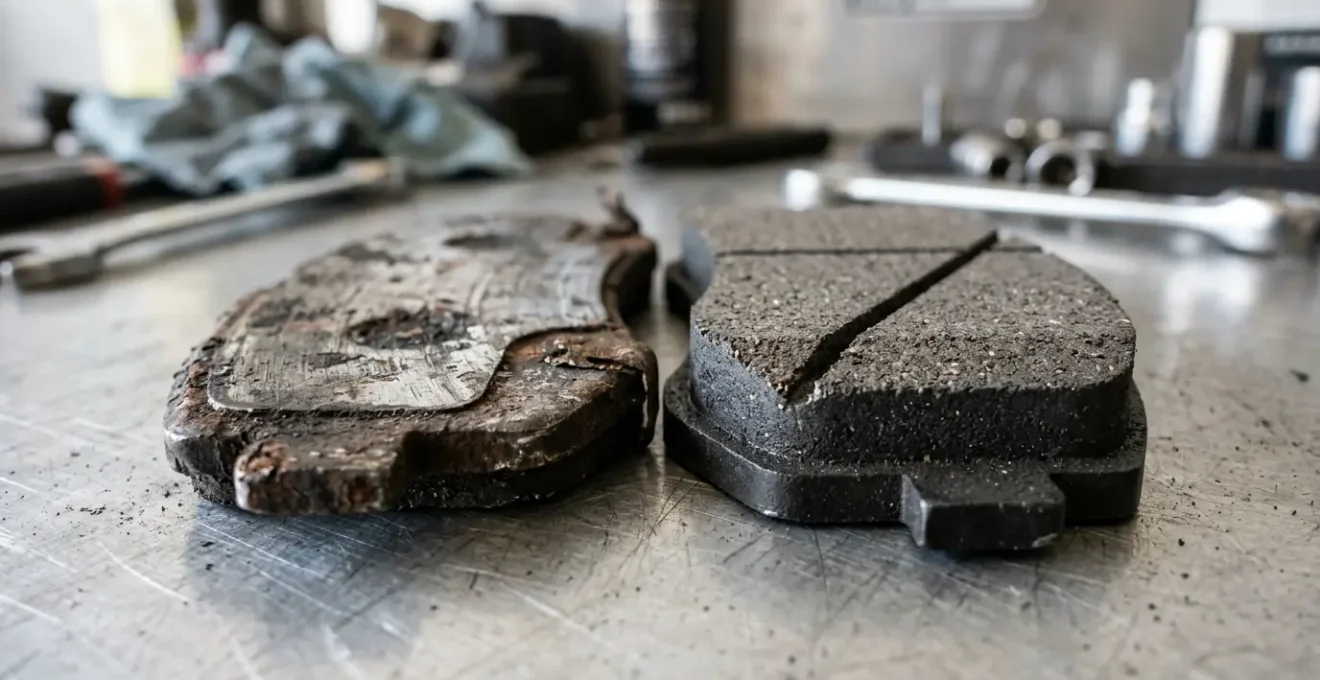
The vast difference in brake pad life isn’t random; it’s governed by the physics of heat management and material science.
- Driving environment is the single biggest factor; one city mile can cause the thermal wear of four motorway miles.
- Material choice dictates performance under heat, with budget pads often failing prematurely due to poor thermal dissipation.
- Driver technique, specifically anticipation, directly controls the number of high-energy heat cycles the brakes must endure.
Recommendation: Shift your focus from « how many miles have I driven? » to « how many heat cycles have my brakes endured? » to accurately predict and extend their life.
It’s a frustratingly common scenario for any UK driver. You replace the brake pads on your daily commuter, only to hear that tell-tale squeal return after a mere 8,000 miles. Yet, a friend with a similar car boasts of reaching 25,000 miles, or even more, on a single set. This inconsistency feels like a lottery, leading many to blame « cheap parts » or aggressive driving. While these factors play a role, they are merely symptoms of a more fundamental principle often overlooked: thermal energy management. The lifespan of your brake pads is not written in miles, but in the number and intensity of heat cycles they are forced to endure.
Every time you press the brake pedal, you are initiating a powerful act of physics: the conversion of kinetic energy (your car’s momentum) into thermal energy (heat). This heat is the primary agent of wear. Understanding how this process unfolds—from the molecular level of the friction material to the broader patterns of your driving environment—is the key to demystifying brake wear. It allows you to move from being a confused victim of unexpected repair bills to an informed driver who can diagnose symptoms, make smarter choices about parts, and even modify your driving to significantly extend the life of these critical safety components.
This article will deconstruct the core factors that govern brake pad longevity. We will analyse the physical reasons behind accelerated wear in different environments, decode the sounds your brakes make, compare the real-world performance of different pad types, and provide actionable strategies to take control of your vehicle’s braking system. By understanding the ‘why’ behind the wear, you can directly influence the ‘when’ of your next replacement.
Summary: The Science Behind Your Brakes’ Lifespan
- Why Does City Driving Wear Brake Pads 4x Faster Than Motorway Commuting?
- What That Metal Scraping Sound Really Means and How Many Miles You Have Left?
- Cheap Aftermarket or Genuine Pads: Do Budget Brakes Actually Stop as Well?
- The First 200 Miles After Brake Replacement: Why Gentle Braking Prevents Glazing?
- When to Replace Marginal Brake Pads: Before or After Your 500-Mile Holiday Drive?
- How to Use the 10-Second Anticipation Rule to Reduce Brake Pedal Use by 30%?
- The Tyre Wear Pattern That Reveals You Have Been Running 10 PSI Low for Months
- Why Do Some Drivers Get 60 MPG in a Car Rated for 45 While Others Get 35?
Why Does City Driving Wear Brake Pads 4x Faster Than Motorway Commuting?
The core reason for the dramatic difference in brake pad lifespan between urban and motorway driving lies not in the distance covered, but in the frequency and intensity of thermal cycles. A 100-mile motorway journey might involve only a handful of gentle braking applications. In contrast, 10 miles of stop-start city traffic can subject the brakes to dozens of sharp, high-energy decelerations. Each of these events constitutes a full thermal cycle: rapid heating as the pads clamp the rotor, followed by a cooling period.
In a city environment, the kinetic energy that needs to be dissipated is high (e.g., braking from 30 mph to a standstill), and the time for cooling is short before the next traffic light or junction demands another application. This relentless sequence of heating and cooling places immense stress on the pad’s friction material. The binding resins within the pad can break down under this repeated thermal assault, leading to accelerated material loss. The rotors have little chance to shed their heat, leading to higher operating temperatures, which further accelerates pad wear.
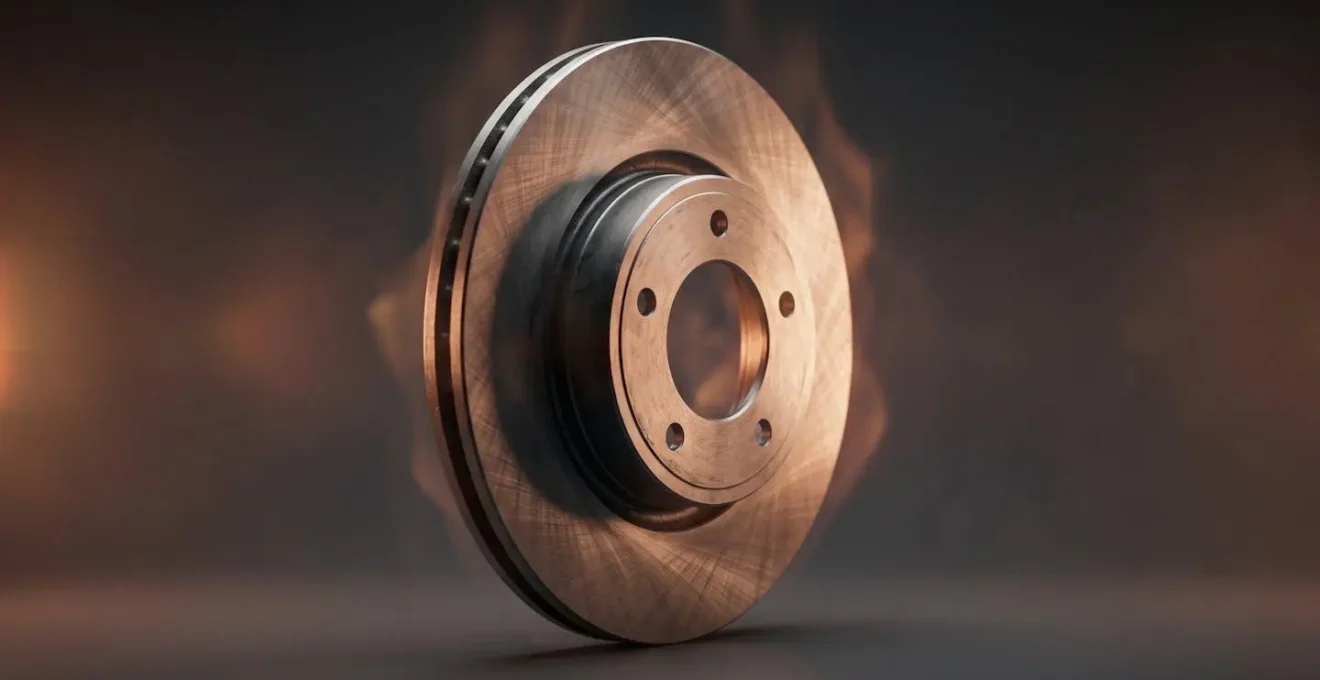
Conversely, on the motorway, braking is typically gradual and from a higher speed. While dissipating energy from 70 mph is significant, these events are infrequent. More importantly, the long periods of cruising at speed create substantial airflow over the brake components, allowing for highly effective heat dissipation. The brakes operate in a much more stable and cooler temperature range, drastically reducing the rate of material degradation. It’s this difference in thermal load, not the miles on the odometer, that explains why urban-driven cars can consume brake pads at a rate that seems disproportionately high.
What That Metal Scraping Sound Really Means and How Many Miles You Have Left?
That high-pitched squeal or low-pitched grind from your wheels is the brake system’s way of communicating distress. However, not all sounds are created equal, and understanding their meaning is crucial for safety and cost management. The most common warning is a high-pitched squealing sound that occurs when you are *not* pressing the brake pedal, often disappearing when you do. This is the sound of the built-in wear indicator, a small metal tab designed to make contact with the brake rotor when the friction material reaches its minimum safe thickness.
When you hear this specific squeal, the vehicle is still safe to drive, but it’s a clear signal to schedule a replacement soon. While it varies by vehicle and driving style, industry experts estimate you have between 200 and 1,000 miles remaining once the wear indicator starts to sound consistently. Ignoring this warning leads to a far more dangerous and destructive noise: a loud, low-pitched grinding or scraping. This sound means the friction material is completely gone, and the pad’s metal backing plate is now grinding directly against the brake rotor. This is a critical safety failure. Not only is stopping power severely compromised, but you are also rapidly destroying the rotor, turning a routine pad replacement into a much more expensive repair.
To differentiate these critical sounds, it’s helpful to diagnose the specific conditions under which they occur. A systematic approach can help you determine the urgency of the situation:
- High-pitched squeal when NOT braking: This is the classic wear indicator. Your pads are low, and replacement is needed soon, but the car remains drivable for a short period.
- Squealing ONLY when braking: This could be the wear indicator, but it might also be caused by brake dust, moisture, or glazing. An inspection is required to confirm pad thickness.
- Low-pitched, metallic GRINDING: This indicates the friction material is exhausted. The metal backing plate is destroying the rotor. Stop driving the vehicle immediately and arrange for repair. This is a severe safety hazard.
- Sound changes when turning: This is often caused by a bent dust shield or a small stone trapped between the pad and rotor, not necessarily pad failure.
Cheap Aftermarket or Genuine Pads: Do Budget Brakes Actually Stop as Well?
The choice between budget-friendly aftermarket brake pads and pricier OEM (Original Equipment Manufacturer) or performance-grade options is one of the most significant decisions affecting both lifespan and safety. While all pads sold in the UK must meet minimum safety standards, their performance under real-world thermal stress varies dramatically. The adage « you get what you pay for » is particularly true when it comes to the complex science of friction materials.
Budget or « white-box » pads are designed to meet a price point. They often use simpler, less-resilient organic friction compounds. While they will stop the car in normal, low-energy situations, their primary weakness is poor heat handling. During repeated hard braking or long descents, they can overheat quickly. This leads to a dangerous phenomenon called « brake fade, » where the pads lose their ability to generate friction, and the pedal feels soft or unresponsive. This poor thermal stability also causes the friction material to break down and wear away much faster, explaining lifespans as low as 8,000 miles.
In contrast, OEM-equivalent and performance pads from reputable brands invest heavily in R&D. They use more complex semi-metallic or ceramic formulations engineered for a wider operating temperature range and superior heat dissipation. This allows them to maintain consistent stopping power even under heavy load, preventing brake fade and ensuring a much more gradual wear rate. A quality pad doesn’t just last longer; it provides a consistent and predictable response every time you press the pedal.
The following table breaks down the common tiers of brake pads, outlining the trade-offs between cost, longevity, and performance. As a technical team from Braman Mini of Miami notes, « Cheap aftermarket brake pads may make more cent, but compromising your own personal wellbeing and safety doesn’t make any sense. »
| Tier | Examples | Expected Lifespan | Cost Range | Best For | Drawbacks |
|---|---|---|---|---|---|
| Budget/White-Box | Generic economy pads | 8,000-20,000 miles | $20-40 | Light-use vehicles, tight budgets | Inconsistent materials, poor heat handling, faster rotor wear, brake fade risk |
| OEM-Equivalent | Brembo, Textar, Jurid, Duralast | 25,000-40,000 miles | $50-100 | Daily driving, standard commuting | May cost more upfront than budget options |
| Performance Upgrade | EBC, Hawk, ceramic compounds | 30,000-70,000 miles | $80-150+ | Towing, mountainous terrain, enthusiast driving | May produce more dust or noise, warm-up period required |
The First 200 Miles After Brake Replacement: Why Gentle Braking Prevents Glazing?
The period immediately following a brake pad and rotor replacement is critical to their long-term performance and lifespan. Many drivers assume new brakes are at their most powerful, but the reality is they require a specific break-in or « bedding-in » procedure to achieve optimal friction. Failing to do this properly can lead to a condition known as glazing, which permanently reduces stopping power and causes premature wear.
Bedding-in is the process of controlled friction material transfer. It involves heating the new pads and rotors through a series of moderate stops to evenly transfer a thin, uniform layer of the pad’s friction material onto the rotor’s surface. This transfer layer is essential for creating the ideal friction couple between the pad and rotor, ensuring maximum braking efficiency and a smooth, quiet operation. When this process is rushed or involves sudden, hard braking, excessive heat is generated too quickly. This intense heat can crystallise the binding resins in the pad’s surface, creating a hard, glassy finish—the « glaze. »
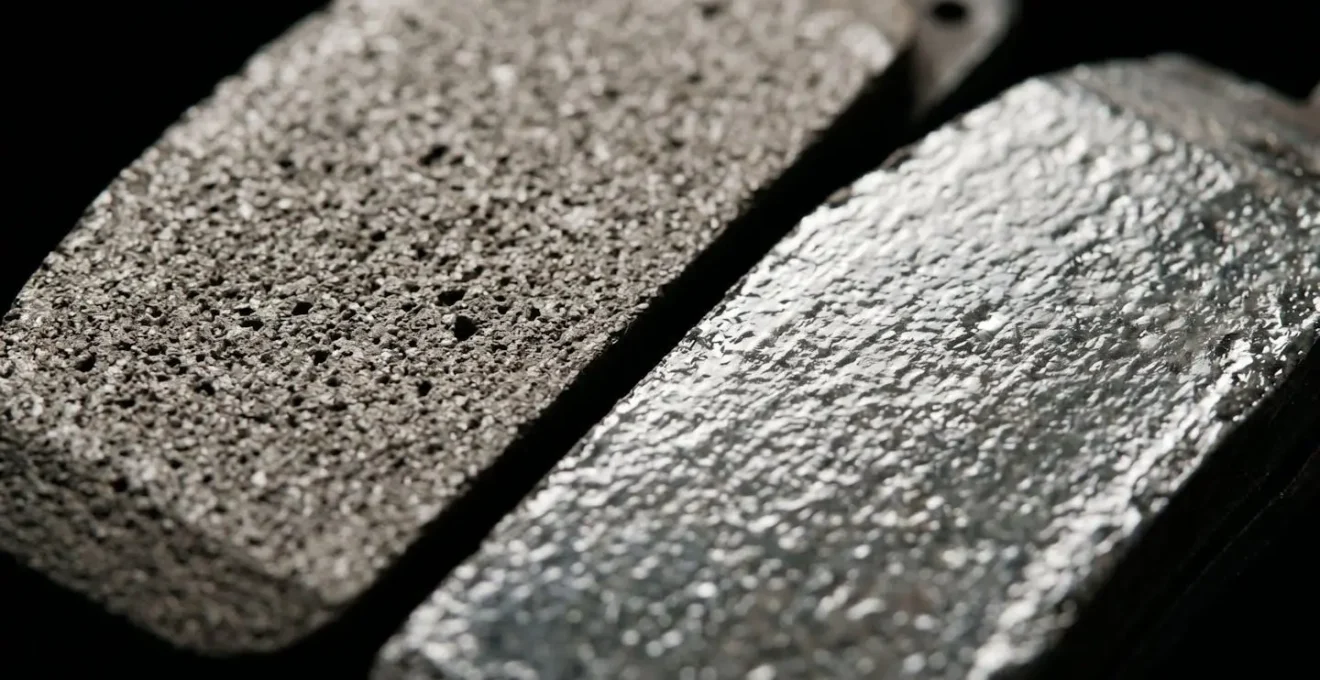
A glazed pad loses its porous, abrasive texture and can no longer effectively grip the rotor. The result is a noticeable reduction in braking performance, often accompanied by a persistent squeal. Furthermore, the glazed surface is much harder and will wear down far less predictably. The first 200 miles should therefore be dedicated to gentle use and, if possible, performing a specific bedding-in procedure to establish that crucial transfer layer and prevent glazing from ever occurring.
Action Plan: The Perfect Street Bedding-In Procedure
- Verify Function: Before you begin, ensure the brake pedal feels firm and the system is working correctly in a safe, low-traffic area.
- Initial Stops: Perform 6-10 moderate stops from approximately 30 mph down to 5 mph. Do not come to a complete stop. Immediately accelerate back to speed after each application.
- Intermediate Stops: Follow up with 2-3 slightly more firm stops from 40-45 mph down to 5 mph, again avoiding a complete halt. The goal is to build heat gradually.
- Cool Down: After the final stop, drive continuously at a moderate speed (e.g., 45+ mph) for at least 10 minutes without using the brakes. This allows the pads and rotors to cool evenly and the transfer layer to set.
- Avoid Holding: During the entire procedure, it’s critical to avoid coming to a complete stop with your foot held on the brake pedal, as this can imprint pad material unevenly on the hot rotor, causing vibration.
When to Replace Marginal Brake Pads: Before or After Your 500-Mile Holiday Drive?
Facing a long drive with brake pads that are worn but not yet at their absolute limit presents a common dilemma. The decision to replace them before or after the trip should be based on a calculated risk assessment, not guesswork. The legal minimum thickness for brake pads in the UK is 1.5mm, but for safety and performance, it is highly advisable to replace them well before that point. Many experts, including those at RepairSmith, advise that once pads are below a 3.2 mm (⅛ inch) minimum thickness, they should be considered for immediate replacement, as their ability to dissipate heat effectively is significantly reduced.
A long holiday drive, especially one involving heavy luggage, multiple passengers, or hilly terrain, places a much higher-than-average thermal load on the braking system. A 500-mile trip through the Peak District or Scottish Highlands can wear down pads far more than 500 miles of flat motorway commuting. Under these demanding conditions, a marginal pad can quickly wear past its safe limit, potentially leaving you with compromised braking performance far from home. A single long, steep descent with a fully loaded car can generate enough heat to wear 1-2mm of pad material, turning a « marginal » set of pads into a dangerous one.
To make an informed decision, you can use a simple risk scoring system based on the nature of your planned trip. This helps to quantify the potential stress on your braking system and guide your choice.
- Trip distance over 300 miles: +1 point
- Mountainous or hilly terrain expected: +3 points
- Heavy load (full car or towing): +2 points
- Current pad thickness is 4mm or less: +3 points
- Trip involves significant city driving: +1 point
Decision Guide: A score of 0-2 points suggests it’s likely safe to proceed. A score of 3-4 points warrants a thorough brake inspection before departure. If your trip scores 5 or more points, replacing the brake pads before you leave is the safest and most prudent course of action. Procrastinating not only gambles with safety but also risks a much more costly repair if a worn-out pad damages a rotor mid-trip.
How to Use the 10-Second Anticipation Rule to Reduce Brake Pedal Use by 30%?
One of the most powerful yet simple techniques to dramatically extend brake life is adopting a driving style rooted in anticipation. The « 10-Second Anticipation Rule » is a mental framework for this: continuously scan the road at least 10 seconds ahead of your vehicle. At 30 mph, this is about 135 metres, or the length of a football pitch. This forward-thinking approach allows you to react to changing traffic conditions not with your brake pedal, but by simply lifting off the accelerator.
When you see traffic slowing down 10 seconds ahead, you can ease off the throttle and allow the car to decelerate naturally through engine braking and rolling resistance. This practice, known as coasting, is the antithesis of the wear-inducing city driving cycle of accelerating towards a red light only to brake hard at the last moment. Each time you choose to coast instead of brake, you are avoiding an entire thermal cycle. You are preventing the conversion of kinetic energy into wasted heat and preserving the friction material on your pads. As the AutoZone Technical Team states, « Every time you coast instead of braking, you are preventing a full heat cycle on the pads and rotors. »
This method not only saves your brakes but also significantly improves fuel economy. An analysis by R1 Concepts on city driving patterns confirmed that anticipatory driving directly reduces both the frequency and intensity of braking events. By maintaining a larger gap to the car in front and looking far down the road, drivers can smooth out their inputs, conserve momentum, and minimise the need to use the brake pedal. Implementing this simple rule can feel unnatural at first but quickly becomes second nature, transforming your driving from reactive to proactive and yielding tangible savings in both fuel and maintenance costs.
The Tyre Wear Pattern That Reveals You Have Been Running 10 PSI Low for Months
While brake pads have their own wear indicators, your tyres can also act as a powerful diagnostic tool for the overall health of your vehicle, including factors that indirectly affect brake wear. One of the most common and telling signs of a persistent issue is the wear pattern caused by chronic under-inflation. If you have been driving with your tyres even 10 PSI below the manufacturer’s recommendation, it will leave a distinct signature on the tread.
An under-inflated tyre sags in the middle, forcing the outer edges, or « shoulders, » of the tyre to carry the majority of the vehicle’s weight and handle the cornering forces. Over several thousand miles, this results in a classic wear pattern: the inner and outer shoulders of the tyre will be visibly more worn down than the centre of the tread, which may still look relatively fresh. This symmetrical wear on both shoulders is a clear indication of running with low pressure.
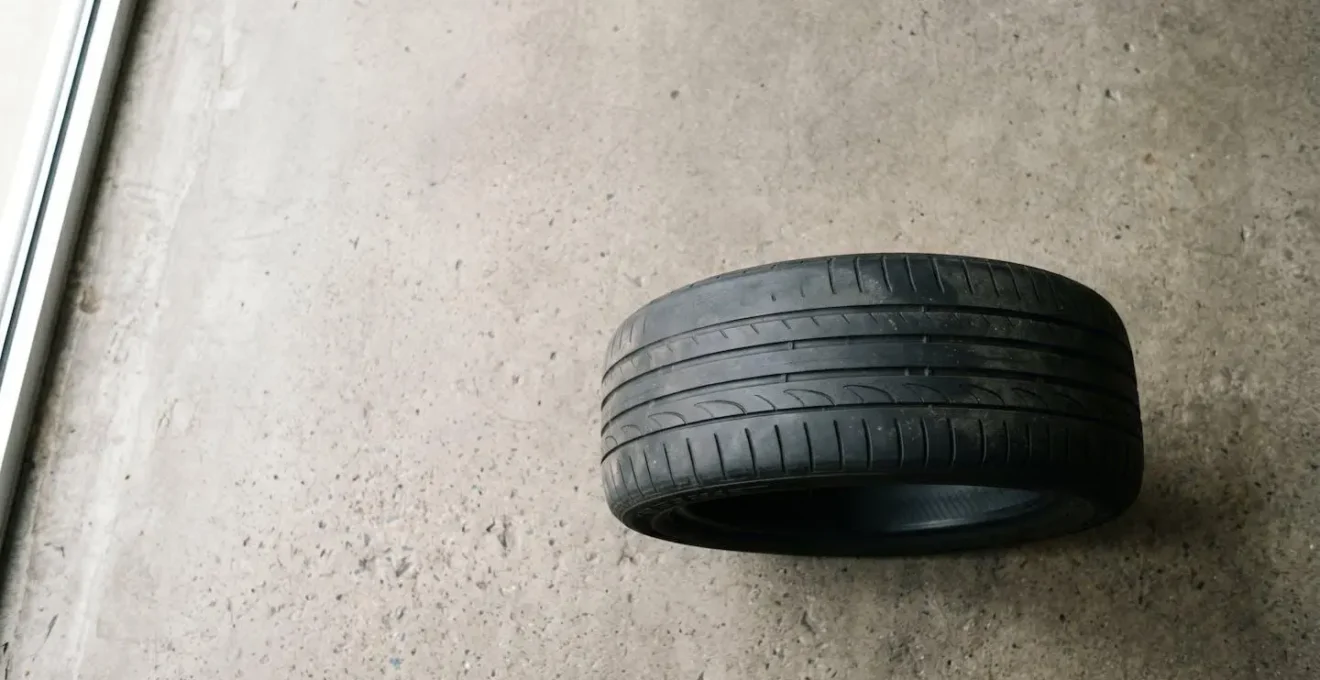
This is not just a tyre problem. Under-inflated tyres have a larger contact patch and higher rolling resistance, meaning the engine must work harder to maintain speed, which wastes fuel. More importantly for brake life, the compromised structure of the tyre can affect handling and stability, potentially leading to less predictable vehicle behaviour and a greater reliance on braking to correct course. It points to a lack of regular maintenance checks, a mindset that likely extends to other areas of the vehicle. Spotting this wear pattern is a wake-up call to be more diligent with weekly or bi-weekly checks of your tyre pressures. Maintaining correct pressures not only maximises tyre life and fuel efficiency but is also a cornerstone of overall vehicle safety and performance.
Key Takeaways
- Brake wear is a function of heat cycles, not miles. City driving is more demanding due to the high frequency of these cycles.
- Pad material is critical. Budget pads offer poor heat management, leading to brake fade and rapid wear, while quality pads maintain performance under stress.
- Driver technique, specifically anticipation and coasting, is the most effective tool for reducing the number of braking events and extending component life.
Why Do Some Drivers Get 60 MPG in a Car Rated for 45 While Others Get 35?
The vast disparity in fuel economy achieved by different drivers in identical cars reveals a profound truth about vehicle operation: driving style is paramount. The very same techniques that allow a « hypermiler » to achieve 60 MPG in a car officially rated for 45 MPG are the ones that dramatically extend brake pad life. The unifying principle is the conservation of momentum. Both fuel consumption and brake wear are fundamentally linked to how a driver manages the car’s kinetic energy.
A driver who only achieves 35 MPG in that same car typically exhibits a pattern of aggressive acceleration followed by late, hard braking. Every time they accelerate, they are paying for kinetic energy with fuel. Every time they brake hard, they are converting that expensive kinetic energy into wasted heat and microscopic particles of brake pad. This cycle of rapid energy gain and rapid energy loss is incredibly inefficient, punishing both the wallet at the pump and the lifespan of the braking system.
Conversely, the hypermiler excels at preserving momentum. They anticipate traffic flow, leave ample space, and use gentle inputs. They see a red light ahead not as a target to race towards, but as an opportunity to lift off the accelerator and coast, letting the car’s momentum do the work. This smooth style minimises the need for braking, treating the brake pedal as a last resort rather than a primary tool. As a case study on driving techniques confirms, the principles of fuel-efficient driving and brake preservation are identical. By focusing on smoothness and anticipation, you are not just saving fuel; you are actively reducing the thermal load on your brakes, leading directly to a longer, more predictable service life.
Ultimately, taking control of your brake pad lifespan means shifting from a reactive to a proactive mindset. By understanding the physics of thermal wear and applying a smooth, anticipatory driving style, you can directly influence the longevity and performance of these critical components. The next logical step is to consciously apply the 10-second anticipation rule on your next drive and observe its effect on your brake pedal usage.