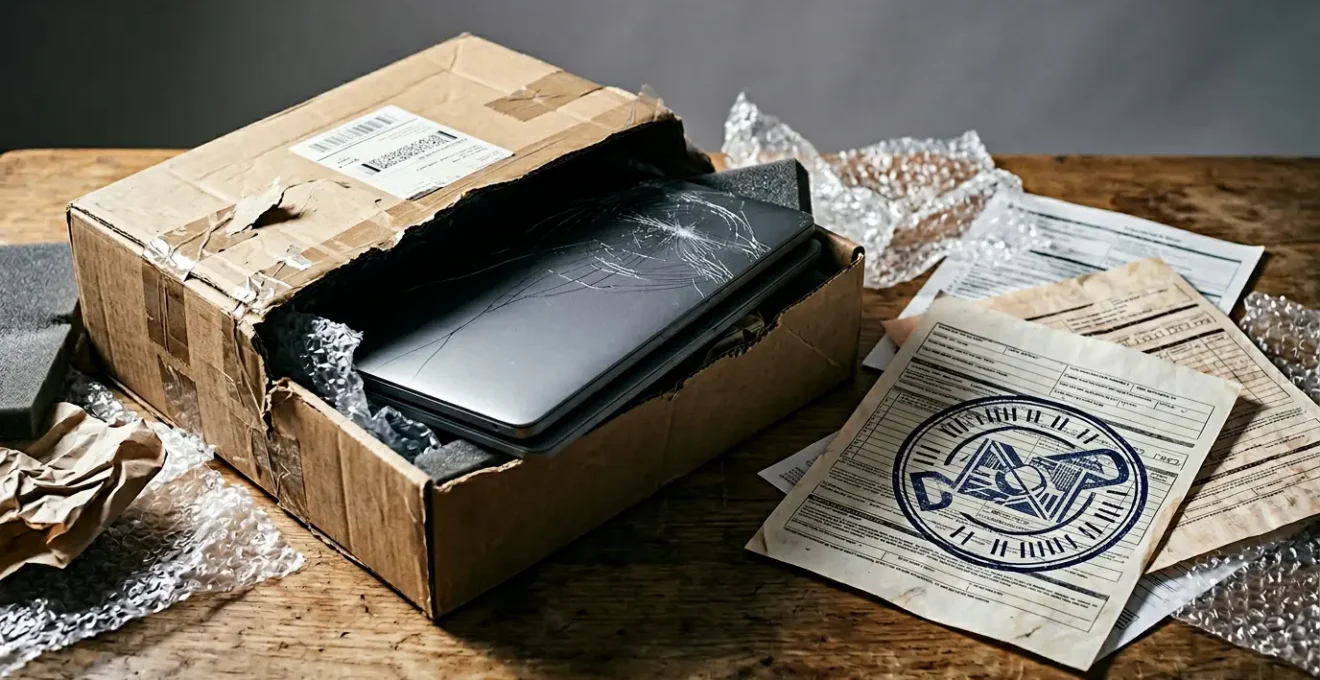
Your insurance claim is denied not because of bad luck, but because you failed to provide irrefutable proof that you met the carrier’s hidden contractual obligations.
- Standard carrier liability is not insurance; it’s a default capped payment, often as low as £100, designed to limit their exposure.
- Generic packaging and « Fragile » stickers are legally meaningless and will be used as justification to void your claim.
Recommendation: Stop thinking about « shipping » and start building a « defensible shipment »—a package so well-documented and protected that any claim becomes undeniable.
It’s a scenario that plays out in businesses across the UK every day. You meticulously pack a £5,000 specialist laptop, send it off with a reputable carrier, and pay for the extra insurance. Days later, your client calls: the device has arrived with a cracked screen or, worse, hasn’t arrived at all. You feel a pang of frustration, but reassure yourself, « That’s what the insurance is for. » You file a claim, providing photos and invoices, only to receive a soul-crushing email weeks later: « Claim denied due to insufficient packaging » or « Claim value limited to £100 as per standard terms. »
For any business shipping high-value electronics, this cycle is not just costly; it’s a drain on resources, customer trust, and morale. The common advice—use more bubble wrap or slap on a ‘Fragile’ sticker—is well-meaning but fundamentally misunderstands the game. These are not procedural errors; they are systemic failures to meet the unwritten rules of logistics. Carriers and their insurers operate within a strict framework of liability and evidence. If you don’t speak their language, your claims are destined to fail.
But what if the real problem isn’t the handler who dropped the box, but the process you followed before it ever left your building? What if the key to getting paid isn’t a better insurance policy, but a better shipping process? This guide moves beyond the platitudes. We will deconstruct the core reasons your claims are rejected and provide a specialist’s framework for building what we call a « defensible shipment »—a package prepared not just for transit, but for the unforgiving scrutiny of a claims assessor.
This article will dissect the critical points of failure in shipping high-value goods. From the box you choose to the last-mile economics that dictate how it’s handled, we will explore the real-world strategies that separate a paid claim from a costly write-off. The following sections provide a complete roadmap to protect your assets.
Summary: A Specialist’s Guide to Winning High-Value Shipping Claims
- Why Generic Cardboard Boxes Void Your Electronics Shipping Insurance?
- How to Prove Your Electronics Were Stolen in Transit Rather Than « Never Shipped »?
- Why Your £3,000 Laptop Claim Gets Paid at £100 Under Standard Carrier Terms?
- Which Fragile Labels and Instructions Actually Change How Carriers Handle Your Package?
- How to Set Up Alerts That Tell You When Your £10,000 Shipment Goes Off-Route?
- DPD, Royal Mail, or Evri: Which Carrier Delivers Fragile Items With Fewest Damage Claims?
- The Unsecured Load Mistake That Carries £5,000 Fines and 3 Points on Your Licence
- Why Does the Last 5 Miles of Delivery Cost More Than the Previous 500?
Why Generic Cardboard Boxes Void Your Electronics Shipping Insurance?
The first line of an insurer’s defence against a damage claim is to scrutinise the packaging. The phrase « insufficient packaging » is not a subjective opinion; it’s a contractual term that refers to a shipper’s failure to use materials that meet specific, industry-recognised standards. A generic, uncertified cardboard box is an open invitation for claim denial. Insurers and carriers know that these boxes often lack the structural integrity, particularly the edge crush strength, required to survive the rigours of automated sorting hubs.
To build a defensible shipment, your packaging must be provably adequate. This means using boxes that are certified by the manufacturer. Look for a small, circular « Box Manufacturer’s Certificate » (BMC) stamp on the bottom flap. This stamp guarantees the box meets specific construction standards, such as the Edge Crush Test (ECT), which measures the stacking strength of the corrugated board. Using a certified box shifts the burden of proof; you are no longer just claiming the box was « strong enough, » you are providing evidence that it met an industry-approved standard.

As the image above illustrates, the integrity of a box is an engineered property, not just a matter of thickness. The flute structure and linerboard quality are precisely calibrated. For high-value electronics, a double-wall box with a high ECT rating (e.g., 48 ECT) is a minimum requirement. Furthermore, many insurance policies for electronics will be voided if the item is not cushioned by at least two inches of new, firm padding on all sides within the box. Using old bubble wrap, newspaper, or an improperly sized box is a guaranteed route to claim rejection. Research confirms that using certified packaging is a sound investment; according to UL Solutions testing data, ISTA certification can reduce product breakage by up to 30%.
Ultimately, your choice of box is the first piece of evidence in your potential claim. A generic box says you neglected your duty of care. A certified box says you acted as a responsible, professional shipper.
How to Prove Your Electronics Were Stolen in Transit Rather Than « Never Shipped »?
When a high-value item vanishes, a carrier’s default position is often to claim the item was never in the box to begin with—a « shipper error. » Without irrefutable proof, it becomes your word against theirs, a battle you are destined to lose. The scale of this problem is staggering; according to InsureShield industry data, approximately 73% of merchants end up paying out-of-pocket for shipments that are lost or damaged. To fight this, you must establish an unbreakable digital chain of custody from the moment of packing to the point of handover.
A simple photo of the item in a box is not enough. You need to create a single, unedited video file that documents the entire process. This video serves as your primary evidence, making it virtually impossible for an insurer to argue that the item was not packed correctly, was non-functional, or was not handed over. This protocol transforms you from a claimant into an auditor with documented proof.
The process involves a series of specific, verifiable actions designed to preempt every common denial tactic. It’s not just about proving you shipped the item; it’s about proving you shipped a specific, working item in secure packaging that was then accepted by the carrier. This level of diligence is the minimum standard for protecting high-value assets in today’s logistics environment.
Your Action Plan: Establishing a Digital Chain of Custody
- Film an unedited video showing the device’s serial number clearly visible on the product label.
- Power on the device in the same video frame to demonstrate functionality before shipping.
- Record the complete packing process including protective materials and box sealing with tamper-evident tape.
- Capture the handover moment to the carrier with visible timestamp and carrier representative acknowledgment.
- Request and archive carrier weight scan logs at multiple checkpoints throughout the logistics network.
While this level of documentation may seem excessive, it is the new professional standard for shipping valuable electronics. In the event of a loss, this video file is not just evidence; it is your leverage.
Why Your £3,000 Laptop Claim Gets Paid at £100 Under Standard Carrier Terms?
One of the most painful lessons in logistics is discovering the difference between « Declared Value » and actual insurance. When you ship a package, carriers provide a default, minimal level of liability coverage. This is not insurance designed to protect you; it’s a contractual term designed to limit their financial exposure in case of loss or damage. For most major carriers, this default liability is shockingly low. The industry standard, even for international giants, is often capped at a nominal amount.
For instance, it’s common for major carriers like FedEx, UPS, and USPS to automatically cap liability at only $100 per package. In the UK, this is typically equivalent to £100 or less. When you « declare a value » for a higher amount and pay an extra fee, you are not buying a true insurance policy. You are simply increasing the carrier’s maximum liability. Crucially, even with a higher declared value, the carrier can still deny your claim entirely if they determine you were at fault (e.g., for « insufficient packaging »).
True, third-party shipping insurance operates differently. It is an « all-risk » policy, meaning it covers loss or damage from any external cause, and the burden of proof is less stringent. More importantly, it is often significantly cheaper than the carriers’ declared value fees. The following table breaks down the fundamental differences every business needs to understand.
| Protection Type | Maximum Coverage | Cost for £1,000 Item (Approx.) | Proof of Fault Required | Covers Consequential Loss |
|---|---|---|---|---|
| Standard Carrier Liability | ~£100 default | Included | Yes – shipper must prove carrier negligence | No |
| Declared Value | Up to £50,000 | ~£12-£20 | Yes – carrier can deny for packaging issues | No |
| Third-Party Insurance | £100,000+ | ~£5-£10 | No – all-risk coverage | Depends on policy |
Relying on a carrier’s standard terms is a gamble you will eventually lose. For any shipment valued over £100, securing a separate, third-party insurance policy is the only commercially sensible decision.
Which Fragile Labels and Instructions Actually Change How Carriers Handle Your Package?
The unfortunate truth is that a standard « Fragile » or « Handle with Care » sticker is, in the world of high-volume logistics, effectively invisible. In sorting facilities where thousands of packages are processed per hour, handlers and automated systems are desensitized to such generic warnings. They do not create any legal or procedural obligation for special handling. To genuinely influence handler behaviour, you must move from passive requests to active, undeniable monitoring. This is where deterrent engineering comes into play.
Instead of asking nicely, you use a device that makes mishandling impossible to hide. The most effective tools are impact and tilt indicators. These are single-use devices affixed to the outside of a package that provide a clear, visual indication if a predefined G-force or tilt angle has been exceeded. Their power lies not just in recording an impact, but in their psychological effect on every person who touches the package.
A handler who sees a live impact indicator is acutely aware that their actions are being monitored. It’s the difference between a generic « Slow Down » road sign and a visible police car with a radar gun. The latter changes behaviour immediately. These devices transform the package from an anonymous box into a monitored asset, significantly increasing the likelihood of careful handling.
Case Study: The ShockWatch Effect
Impact monitoring labels from brands like ShockWatch provide a clear example of this principle in action. These tamper-proof mechanical devices contain a vial of red liquid that ruptures when a package experiences an impact beyond a calibrated G-force threshold. The resulting bright red stain provides irrefutable evidence of mishandling, making it nearly impossible for carriers to attribute damage to pre-existing conditions. More importantly, their deterrent effect is well-documented; industry testing shows that professionally calibrated impact indicators have been shown to reduce product damage by up to 60% simply because handlers who see the label exercise greater care.
For any shipment where the value justifies the small additional cost, an impact indicator is one of the most effective forms of insurance you can buy. It changes the dynamic from hope to accountability.
How to Set Up Alerts That Tell You When Your £10,000 Shipment Goes Off-Route?
When a shipment’s value enters the thousands, passive reliance on a carrier’s standard tracking page is no longer a sufficient security measure. Carrier scans can be delayed, missed, or simply inaccurate. For true peace of mind and the ability to intervene in a potential theft or loss situation, you need active, real-time intelligence. This is achieved by embedding a dedicated GPS tracker inside your shipment.
Modern GPS trackers are small, have long battery lives, and operate on cellular networks independently of the carrier’s systems. They provide a second, verifiable source of truth about your package’s location. Their most powerful feature, however, is not just tracking, but the ability to set up automated alerts based on custom rules. By creating a « geofence »—a virtual perimeter along the expected transit route—you can receive an immediate notification the moment your package deviates.
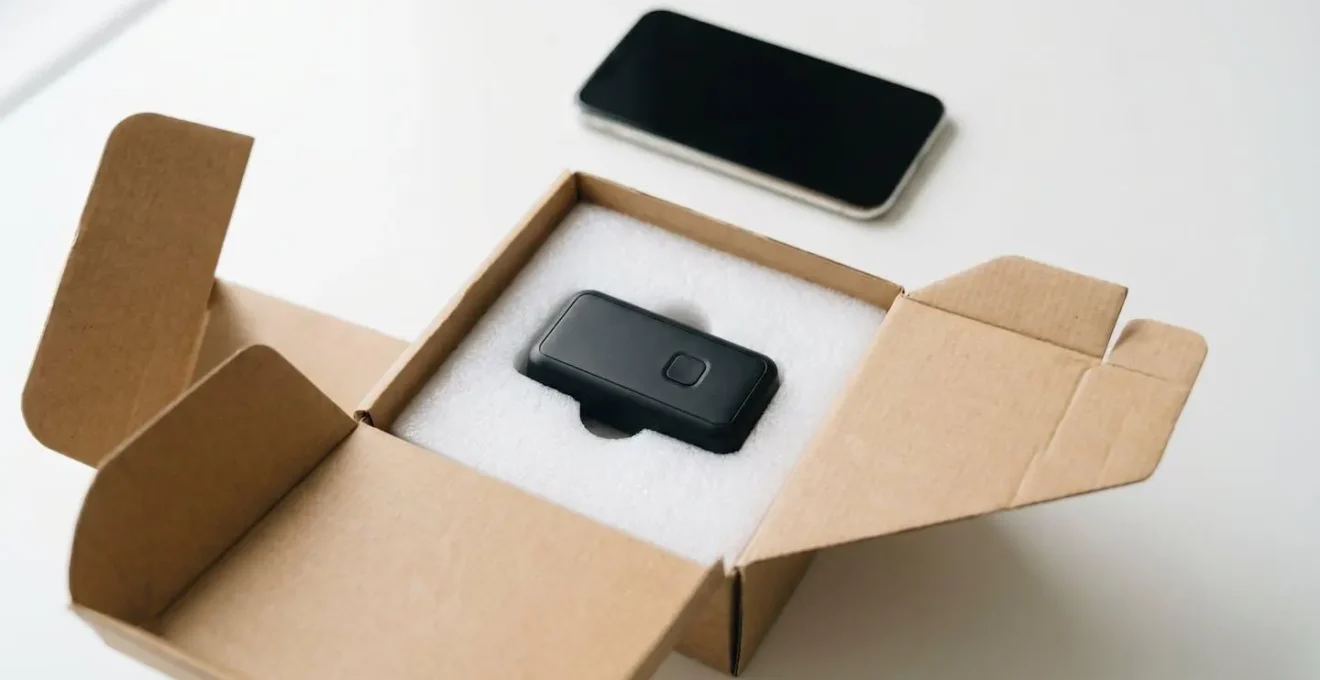
An alert for a deviation from a designated motorway, or a « dwell time » alert for a package that has been stationary in an unscheduled location for more than a few hours, is an invaluable early warning of a potential problem. This allows you to proactively contact the carrier’s security department with specific, actionable data (« Our asset is currently located at 51.5072° N, 0.1276° W, which is not a designated hub. Please investigate immediately. ») instead of passively waiting for the next scan. Setting up these alerts is a straightforward process:
- Select an independent tracker: Choose a device with its own cellular connection (LTE-M is common) so it doesn’t rely on nearby Bluetooth signals.
- Configure a geofence: In the tracker’s companion app, draw a corridor around the expected transport route (e.g., along the M1 from London to Leeds).
- Set dwell time alerts: Create a rule to notify you if the tracker is stationary for an unusual length of time (e.g., more than 8 hours) outside of a known distribution centre.
- Enable motion alerts: Receive a notification the moment the package starts moving from a depot, giving you a head-start on delivery confirmation.
- Share tracking links: Provide a view-only link to your client or recipient so they can see the asset’s progress in real-time, enhancing trust and customer service.
Using a GPS tracker with geofencing alerts shifts you from a passive observer to an active overseer of your valuable assets, giving you the power to act before a problem becomes a total loss.
DPD, Royal Mail, or Evri: Which Carrier Delivers Fragile Items With Fewest Damage Claims?
Businesses often try to solve the damage problem by asking, « Which carrier is best? » This is the wrong question. While service levels vary, most major UK carriers (including DPD, Royal Mail, and Evri) operate on a fundamentally similar « hub-and-spoke » model. This model is designed for cost-efficiency in high-volume networks, but it is inherently risky for fragile, high-value items. Your package will be handled multiple times, loaded onto various vehicles, and processed through automated sorting machinery where impacts are common.
A package sent from London to Manchester doesn’t travel in a dedicated van. It goes to a local depot, is trunked overnight with thousands of other parcels to a central sorting hub (like those in the Midlands), sorted automatically, trunked again to a Manchester depot, and finally loaded onto a local delivery van. Each step is a potential point of damage, loss, or misrouting. Therefore, the more pertinent question is not *who* is the carrier, but *how* can you bypass the high-risk hub-and-spoke system?
For larger or palletised shipments, emerging models offer a solution. As the logistics experts at Flock Freight note, the goal is to minimise handling. They state:
Shared Truckloads combine freight going to the same destination, eliminating the hub-and-spoke model and reducing costly pallet damage, delays, and loss.
– Flock Freight, Shipping Insurance for High-Value Electronics and Tech Industry Analysis
This principle—point-to-point transit—dramatically reduces risk. While not always feasible for single parcels, it highlights the core issue. The risk of damage is directly proportional to the number of touchpoints. The inefficiencies of the standard model are also a major cost driver, as logistics research indicates that up to 25% of last-mile costs can be attributed to handling exceptions and re-deliveries.
The best carrier is not a brand name, but a logistics solution that offers the most direct route with the fewest possible handling events between you and your client.
The Unsecured Load Mistake That Carries £5,000 Fines and 3 Points on Your Licence
Your responsibility for a high-value shipment doesn’t begin when the carrier collects it. It begins the moment you move it. A surprisingly common and dangerous point of failure occurs *before* the package even reaches the Post Office or depot: transporting it unsecured in your own vehicle. Placing a heavy box containing a £3,000 laptop on the back seat of a car is not just poor practice; it’s a specific offence under UK law.
The Road Vehicles (Construction and Use) Regulations 1986 (Regulation 100) are clear: loads must be secured so that they are not a danger or nuisance. An unsecured box on a car seat poses a significant threat. In a sudden stop or collision, the laws of physics take over. A relatively light 10kg box, in a 50mph crash, can exert a force equivalent to 500kg—becoming a deadly projectile within the vehicle cabin. This is why police can, and do, issue on-the-spot fines and penalty points for unsecured loads.
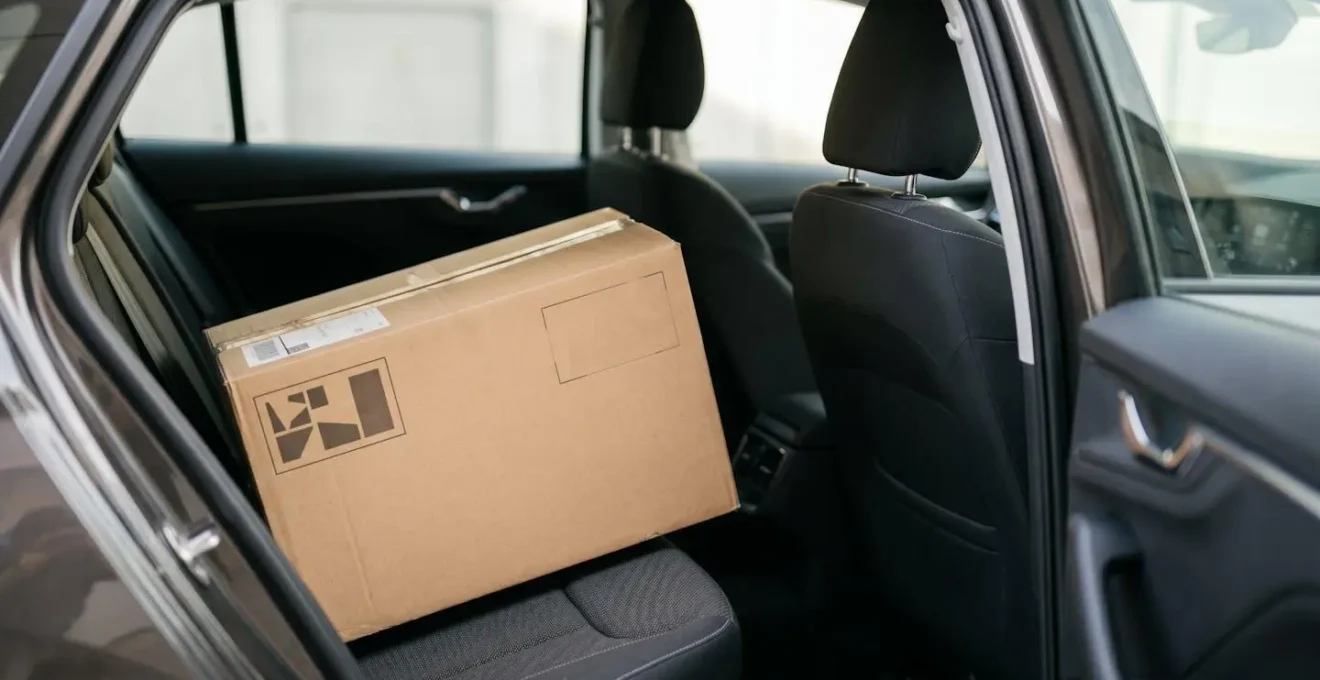
As the image shows, this common sight is a significant compliance failure. The potential consequences are severe:
- Legal Penalties: A fine of up to £5,000 and 3 penalty points on your driving licence.
- Insurance Invalidation: In the event of an accident caused by the shifting load, your vehicle insurance could be invalidated.
- Product Damage: Even a sharp turn or emergency brake can send the package tumbling, causing the very damage you seek to avoid.
The correct procedure is to always secure items in the boot, ideally against the rear seats, or using the vehicle’s cargo nets and anchor points. If the load must be in the passenger cabin, it should be on the floor or secured with a seatbelt.
Treating your own vehicle as the first leg of the professional logistics journey is a crucial mindset shift. The chain of custody and care starts with you.
Key Takeaways
- Standard carrier liability is not insurance; it is a default, low-value cap designed to limit the carrier’s risk, not protect your asset.
- Your choice of packaging is your first and most critical piece of evidence. Uncertified, generic boxes are grounds for instant claim denial.
- A « defensible shipment » is built on irrefutable evidence: a videoed chain of custody, certified materials, and active monitoring devices.
Why Does the Last 5 Miles of Delivery Cost More Than the Previous 500?
The « last mile » of delivery is the most complex, expensive, and risk-prone stage of the entire logistics journey. Transporting a single package from a national hub to your client’s specific address can cost more than transporting a lorry-load of packages 500 miles on the motorway. This economic reality, driven by what is known as « drop density, » is the hidden force behind many delivery failures and damaged goods.
Think of it this way: on the motorway, a driver moves thousands of packages simultaneously. In the last mile, a driver might only deliver 10-20 packages per hour, navigating traffic, parking, and finding individual addresses. This low drop density makes each stop incredibly expensive. Consequently, carriers are under immense pressure to increase speed and efficiency, which often leads to rushed handling, packages left in unsecured locations, and increased risk of damage. This is a system problem, not an individual driver problem.
The Economics of Parcel Lockers
The aggressive expansion of locker and pickup point networks by carriers like DPD and Amazon is a direct response to this economic challenge. Traditional home delivery has low drop density and a high failure rate (10-25% of attempts require a costly second visit). In contrast, a driver can deposit 50+ packages at a single bank of lockers in minutes, achieving massive efficiency. This is not just about customer convenience; it’s an economic necessity for carriers to manage the spiralling costs of the last mile. It demonstrates that the system is incentivised to move away from individual, high-risk residential drops.
Understanding this puts you in a powerful position. You realise that relying on the fragile last-mile system is a risk. This is why shifting your financial protection away from the carrier is so critical. As multiple analyses show, dedicated third-party insurance provides superior coverage at a lower price. In fact, cost analysis reveals that third-party shipping insurance can be up to 50% cheaper than a carrier’s declared value fees, while offering broader, « all-risk » protection against the very failures that the last-mile economy creates.
Stop subsidising the carrier’s inefficient last-mile model with write-offs. Protect your business by understanding the economics at play and securing your own independent, comprehensive insurance coverage. Review your current shipping process today, identify these critical vulnerabilities, and implement a defensible strategy before your next high-value shipment is entrusted to the system.