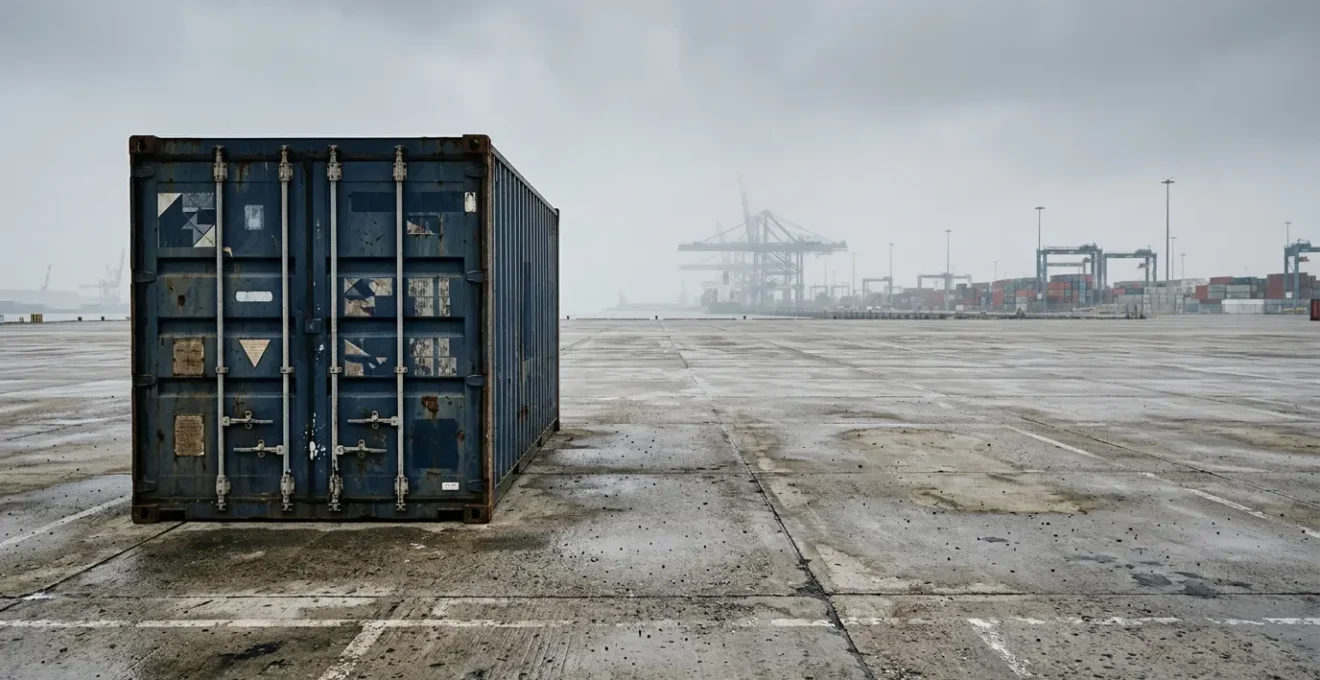
Your customs delay was not bad luck; it was a predictable, system-triggered response to a specific documentation failure.
- Inaccurate HS Codes and vague goods descriptions are the top triggers for manual inspections and duty recalculations.
- Failing to provide a clear audit trail for UK origin means you forfeit zero-tariff access under the TCA, unnecessarily adding cost.
Recommendation: Shift from a reactive, form-filling mindset to a proactive compliance strategy by treating your customs declarations as a strategic asset that shields your business from costly delays.
The status update « Held at Customs » is one of the most frustrating notifications a business can receive. A 72-hour delay at a port like Dover is not just a logistical inconvenience; it’s a direct financial hit. It means missed delivery slots, potential spoilage for perishable goods, angry customers, and expensive holding charges. In the post-Brexit environment, many businesses blame this friction on general bureaucracy or bad luck. The common advice is often to « fill out your paperwork correctly » or « hire a customs agent, » but this advice fails to address the core of the issue.
The reality is that customs systems, particularly the UK’s Customs Declaration Service (CDS), are not arbitrary. They are rule-based platforms that use algorithms to flag inconsistencies. A delay is rarely a random event. It is a predictable consequence of a specific data mismatch or a missing piece of evidence that triggers an automated red flag. The key to preventing these delays is not just to fill in the boxes, but to understand the logic behind them—to see the declaration not as a bureaucratic hurdle, but as a data-driven process.
This article will dissect the anatomy of a customs hold. We will move beyond generic advice and analyze the specific, quantifiable trigger points that lead to delays and financial penalties. By understanding the ‘why’ behind Harmonized System (HS) codes, rules of origin, and declaration timings, you can transform your customs process from a reactive, costly firefight into a proactive, predictable, and ultimately competitive part of your supply chain.
To navigate this complex landscape, we will break down the critical components of post-Brexit customs compliance. This guide provides a structured look at the most common failure points and the strategic decisions necessary to build a resilient cross-border operation.
Summary: A Specialist’s Guide to Preventing Post-Brexit Customs Delays
- Why Getting Your HS Code Wrong Costs You 12% in Unnecessary Import Duty?
- How to Prove UK Origin to Claim Zero-Tariff EU Access Under TCA?
- Customs Agent or DIY Declarations: Which Costs Less at 50 Monthly Shipments?
- The 5 Customs Form Mistakes That Flag Your Shipment for Physical Examination
- When to Submit Your Customs Entry to Avoid Weekend Holding Charges?
- Why Did a Single Port Closure Cost UK Retailers £2.3 Million in Lost Sales?
- Why Your Tracking Shows « In Transit » for 5 Days Without Any Location Updates?
- How Did Post-Brexit Supply Chain Restructuring Save UK Distributors 18% on Cross-Border Costs?
Why Getting Your HS Code Wrong Costs You 12% in Unnecessary Import Duty?
The Harmonized System (HS) code, or commodity code, is the single most critical piece of data on a customs declaration. It is not just an administrative number; it is the DNA of your product in the eyes of customs authorities worldwide. This code dictates the rate of import duty, the application of VAT, and whether the goods are subject to specific licensing controls or regulations. Getting it wrong is not a minor clerical error; it’s a fundamental misdeclaration with severe financial consequences.
An incorrect HS code can lead to an immediate overpayment of duty. For instance, classifying a product under a code with a 12% tariff when a more specific code carries a 0% rate is a direct, unrecoverable loss. More dangerously, underpaying duty due to a wrong code creates a significant compliance risk. HMRC can demand back-payments for incorrect HS codes for up to 3 years, turning a past mistake into a future liability with interest and potential fines. This risk makes accurate classification a cornerstone of fiscal prudence.
Given the complexity of the UK Trade Tariff, relying on guesswork or a supplier’s suggested code is a high-risk strategy. The only way to achieve certainty and create a « compliance shield » is to obtain a Binding Tariff Information (BTI) ruling from HMRC. A BTI is a legally binding decision on the correct commodity code for your specific product, valid for up to three years. It removes all ambiguity and provides a bulletproof defence in the event of a customs audit, ensuring predictable costs and smooth clearance.
Your Action Plan: Applying for a Binding Tariff Information (BTI) Ruling
- Product Deconstruction: Identify and document your product’s technical specifications and composition in precise detail, including materials, manufacturing process, and intended use.
- Tariff Research: Use the official UK Trade Tariff service at gov.uk/trade-tariff to research potential HS codes and understand the chapter notes and legal definitions.
- Formal Submission: Submit your BTI application to HMRC via the government portal with full product documentation. The more detailed your submission, the faster and more accurate the ruling.
- Await Ruling: Wait for HMRC to issue the legally binding ruling. Standard applications are typically processed within 120 days, so this is a proactive, not a last-minute, measure.
- Implement and Record: Apply the official BTI code to all future shipments of that product and keep the ruling documentation as part of your import records for the full validity period.
Ultimately, investing time in securing a BTI is a strategic decision to trade a small amount of upfront administrative effort for long-term financial predictability and risk mitigation.
How to Prove UK Origin to Claim Zero-Tariff EU Access Under TCA?
One of the central promises of the Trade and Cooperation Agreement (TCA) between the UK and the EU was the provision for tariff-free trade. However, this benefit is not automatic. It must be actively claimed and, crucially, robustly proven. To claim « preferential origin » and qualify for zero tariffs, goods must meet specific « rules of origin » defined in the agreement. Simply shipping from a UK warehouse is not sufficient; you must be able to demonstrate that the goods themselves are of UK origin through their manufacturing process.
The burden of proof lies entirely with the exporter (for a ‘Statement on Origin’) or the importer (claiming based on ‘Importer’s Knowledge’). This requires a complete and auditable trail of documentation, including supplier declarations for all components and materials used in production. Without this evidence, the goods are considered « non-preferential, » and standard third-country tariffs will apply, instantly eroding margins. The failure to grasp this has been a costly lesson for many businesses.
Case Study: The Cost of Complexity in the UK Textiles Sector
Post-Brexit research revealed a startling trend in the UK’s textiles and clothing sector. Studies showed that only between 10% and 53% of eligible UK exports to the EU actually claimed the zero-tariff benefit. Businesses consistently cited the perceived complexity and burdensome documentation of the rules of origin as the primary reason. Rather than investing the time to understand if they qualified, many simply defaulted to paying standard duties. This represents a significant, self-inflicted financial blow and a stark example of how failing to master the rules leads to a direct loss of a key competitive advantage provided by the TCA.
This highlights a critical point: the rules of origin are not just a legal technicality but a commercial necessity. Building a robust system for collecting and maintaining supplier declarations is as important as the manufacturing process itself. It is the bedrock of your claim to preferential tariffs.
Visualizing the supply chain is key. Every input must be traced and documented to build a complete picture for customs authorities, ensuring your final product’s origin status is irrefutable.

As the image suggests, the process requires meticulous attention to detail, tracking materials from their source to the finished product. A strong audit trail is your best defence against a customs challenge and the only way to secure the financial benefits of the TCA consistently. Without it, you are effectively choosing to pay tariffs that the trade deal was specifically designed to eliminate.
For any business trading with the EU, establishing a clear, documented process for managing rules of origin is no longer optional; it is a fundamental requirement for competitive cross-border trade.
Customs Agent or DIY Declarations: Which Costs Less at 50 Monthly Shipments?
A frequent dilemma for growing businesses is whether to continue outsourcing customs declarations to an agent or to bring the function in-house. The decision is often framed purely in terms of direct cost, but this overlooks the more significant factors of risk, control, and liability. With the administrative cost of customs declarations representing an estimated £7.5 billion annual burden on UK businesses, making the right strategic choice is critical.
At a volume of 50 monthly shipments, a business is at a crossroads. Outsourcing to a customs agent or fast parcel operator offers simplicity and access to expertise, but at a per-declaration fee that quickly adds up. Bringing declarations in-house eliminates this direct fee but introduces significant new costs: specialist software subscriptions, staff training and salaries, and, most importantly, the full assumption of liability for any errors. An incorrect declaration made by an in-house team is the company’s direct legal and financial responsibility.
The choice is not simply about which column has a lower number. It’s a strategic decision about risk appetite. A good customs agent carries professional indemnity insurance and takes on the liability for the accuracy of the declarations they submit on your behalf. A DIY approach means the business must provision for this risk itself. The following cost breakdown provides a model for evaluating the true « all-in » cost of each approach at this key volume.
| Cost Component | Customs Agent Model | DIY In-House Model |
|---|---|---|
| Per-declaration fee | £25-£75 per entry | £0 (absorbed internally) |
| Monthly cost (50 shipments) | £1,250-£3,750 | £0 direct fee |
| Software subscription | Included in agent fee | £200-£500/month (CDS-ready platform) |
| Staff time cost | Minimal (liaison only) | 1-2 FTE @ £35,000-£45,000/year |
| Training & compliance | Agent responsibility | £2,000-£5,000/year (courses, updates) |
| Error risk provision | Agent liability (insurance) | £5,000-£15,000 annual contingency |
| Annual Total (50/month) | £15,000-£45,000 | £42,000-£66,000 (all-in cost) |
| Break-even point typically occurs at 30-40 monthly shipments for routine, non-complex goods | ||
For businesses with standard, non-complex goods, using a customs agent often remains more cost-effective and carries lower risk until shipment volumes consistently exceed 100 per month. The DIY model only becomes financially viable when the company is prepared to invest heavily in a dedicated, expert internal function.
The 5 Customs Form Mistakes That Flag Your Shipment for Physical Examination
A physical examination by Border Force is the most time-consuming and costly outcome of a customs check. While some inspections are random, many are triggered by specific, avoidable errors on the customs declaration. The CDS system is designed to algorithmically identify declarations that deviate from the norm or contain internal inconsistencies. These are not simple typos; they are « red flags » that signal a higher risk of non-compliance, prompting the system to route the shipment for inspection.
Understanding these triggers is the key to staying in the « green lane. » Each of the following mistakes represents a logical inconsistency that a machine can easily detect. By ensuring your data is precise, consistent, and specific, you dramatically reduce the probability of your shipment being flagged for a disruptive and expensive manual check.
- Vague Goods Description: Using generic terms like ‘Spare Parts,’ ‘Promotional Items,’ or ‘Samples’ is a major red flag. The system expects a precise description (e.g., ‘Stainless steel automotive brake disc, 280mm diameter’) to verify the HS code and value. Vagueness suggests an attempt to obscure the true nature of the goods.
- Weight and Value Inconsistency: The system cross-references the declared weight and value against the HS code. If you declare 1,000kg of « feathers » (low value/weight) but the weight ticket shows 10,000kg, or declare « lead ingots » with a value of £100, the algorithm flags an anomaly. The declared weight must align with the haulier’s weighbridge ticket and be plausible for the goods described.
- EORI-Address Mismatch: A simple but common error. The importer or exporter address declared on the entry must exactly match the address registered to that EORI number in HMRC’s central system. Any discrepancy, even a minor one, can trigger an automatic fraud alert and a hold for identity verification.
- Incorrect Commodity Code Logic: This goes beyond just the wrong duty rate. Using an HS code for « live animals » on a shipment described as « machine parts » is an obvious logical contradiction that the system will instantly target for verification. The description and the code must tell the same story.
- Missing or Invalid Origin Documentation: Claiming a zero-tariff preference under the TCA without a valid, corresponding Statement on Origin number or without holding the necessary ‘Importer’s Knowledge’ evidence is a direct challenge to the system. It results in an immediate hold while customs re-assesses the entry and demands full payment of the duty that was claimed as exempt.
Treating the customs declaration as a meticulous data entry exercise, rather than a form-filling task, is the most effective way to ensure your shipments are processed by the system without the need for human intervention.
When to Submit Your Customs Entry to Avoid Weekend Holding Charges?
In logistics, timing is everything. For shipments arriving at a UK port like Dover, a customs entry cleared at 4 PM on a Friday is vastly different from one cleared at 6 PM. The latter may mean the shipment sits in a port compound, accumulating storage and demurrage charges, until customs offices reopen on Monday morning. The key to avoiding these « dead time » costs is not to ship earlier, but to clear earlier through a process known as pre-lodgement.
The UK’s Goods Vehicle Movement Service (GVMS) is the system designed to facilitate this. It allows importers and exporters to link their customs declaration to a single Goods Movement Reference (GMR) well before the vehicle arrives at the port. By pre-lodging the declaration, it can be processed by customs—and potentially cleared—while the goods are still in transit. This de-links the physical arrival of the truck from the administrative clearance, creating a powerful tool for efficiency and cost avoidance.
A logistics coordinator who masters this process can ensure a truck arriving on a Friday evening already has a « Route 1 » (cleared) status in GVMS, allowing it to proceed directly through the port without stopping. This proactive monitoring transforms customs from a bottleneck into a seamless part of the journey.

The goal is to achieve « arrived » status in the customs system before the truck physically arrives. This requires close coordination between the trader, the customs agent, and the haulier. The step-by-step process below outlines how to effectively use GVMS to secure pre-arrival clearance.
- Lodge Declaration via CDS: Complete and submit your customs import or export declaration through the Customs Declaration Service (CDS) to receive your unique Entry Number (MRN). This should be done as soon as the final shipment details are confirmed.
- Create the GMR: Log into the GVMS portal and create a new Goods Movement Reference (GMR). This reference will act as the single ‘master’ ID for the entire movement.
- Link All Declarations: Link the MRN from your customs declaration (and any other relevant references like Safety & Security or transit declarations) to the single GMR before the vehicle departs its point of origin.
- Inform the Haulier: Provide the haulier with the complete and valid GMR. This single reference replaces multiple paper documents and is what they will present at the port of departure.
- Monitor GMR Status: Proactively check the GMR status in the GVMS portal. Look for the customs response: Route 1 (cleared), Route 2 (documentary check), or Route 6 (physical exam). This gives you advance warning of any potential delays.
By shifting the clearance process away from the physical border, you can effectively bypass the risk of weekend holds and ensure your supply chain keeps moving 24/7.
Why Did a Single Port Closure Cost UK Retailers £2.3 Million in Lost Sales?
While perfecting your own customs documentation is critical, it’s equally important to understand the fragile ecosystem in which your goods are moving. Your shipment is just one of thousands in a complex, just-in-time system. A single point of failure—a strike, a technical outage, or insufficient staffing at a key chokepoint—can trigger a catastrophic « bullwhip effect, » where a minor initial disruption amplifies into days or weeks of systemic gridlock.
The cost of being caught in this gridlock is staggering. When a port like Dover experiences a critical incident, the direct costs of the delay are only the beginning. Modelling by Logistics UK has shown that in a worst-case scenario, new border controls could add costs of £1,100 per truck. This includes driver waiting time, fuel, missed ferry slots, and demurrage charges. However, the indirect costs—lost sales, production line stoppages, and reputational damage—are often far greater.
Case Study: The Domino Effect of a Dover Critical Incident
During a weekend critical incident at the Port of Dover caused by insufficient French border police staffing, freight operators reported facing 5.5-hour delays into the EU. This seemingly short disruption had massive knock-on effects. One food manufacturer alone lost over £1 million in sales as their products missed key retail promotions for a seasonal period. The incident demonstrated how a 48-hour port disruption can create a 1-2 week backlog due to « vessel bunching » (multiple ferries arriving at once), yard congestion, and a subsequent shortage of available hauliers. This is the classic supply chain bullwhip effect in action, where a small initial variance creates exponentially larger problems upstream.
This illustrates a vital principle of post-Brexit logistics: you cannot control external events, but you can control your own readiness. Having immaculate, pre-cleared documentation does not prevent a port from closing. However, it does ensure that when the port reopens, your shipment is at the front of the queue to get through, while those with unresolved customs issues remain stuck. Compliance is your fast pass through the inevitable chaos.
In this environment, minimizing the time your goods spend in the customs process is not just an efficiency gain; it is a critical risk mitigation strategy against systemic supply chain fragility.
Why Your Tracking Shows « In Transit » for 5 Days Without Any Location Updates?
One of the most perplexing post-Brexit phenomena is the « in transit » black hole. Your haulier’s tracking system shows the truck is on the move, perhaps even in the UK, but the status hasn’t updated for days, and the delivery ETA keeps getting pushed back. This frustrating situation is almost always caused by a disconnect between physical movement and customs status. The truck is moving, but the goods inside it are not legally cleared to enter the country’s commerce.
This « data gap » occurs because the carrier’s tracking system (based on GPS and vehicle scans) operates independently from HMRC’s customs system (CDS/GVMS). The carrier knows where the vehicle is, but only customs knows the legal status of the goods. When your tracking is stuck on « In Transit, » it typically means one of the following has occurred:
- Documentary Hold (Route 2): The customs declaration has been flagged for a documentary check. A customs officer needs to manually review the paperwork. The truck may be directed to an Inland Border Facility (IBF) to await this review, and it cannot proceed until the query is resolved and the status is updated to « cleared. »
- Physical Inspection Hold (Route 6): The shipment has been selected for a physical examination. The truck must report to a specific customs facility for inspection. The « In Transit » status will not change until the inspection is complete and the goods are officially released by Border Force.
- GMR or Entry Error: There may be an error in the GMR, or the customs entry has not been correctly linked. The vehicle is physically allowed to board the ferry but is held at the port of arrival because it does not have a valid, cleared GMR to proceed inland.
In all these cases, the haulier’s system correctly reports the truck’s location (e.g., « At Port of Dover » or « At Sevington IBF »), but from a delivery perspective, it is stationary. The delay is not a logistics failure; it is a customs compliance failure. The « In Transit » status will only update to « Out for Delivery » once the customs hold is lifted and HMRC’s systems communicate the release back to the haulier. Proactive communication with your customs agent to check the declaration status in CDS is the only way to get a true picture of the situation.
Understanding this distinction is vital for accurately diagnosing delays and providing clear information to end customers, preventing frustration caused by misleading tracking information.
Key Takeaways
- Customs delays are not random; they are predictable results of specific data inconsistencies flagged by automated systems.
- The true cost of a customs error includes not just fees but also holding charges, lost sales, and up to three years of back-payable duty.
- A proactive compliance strategy, including BTI rulings and robust origin proof, transforms customs from a costly burden into a competitive advantage.
How Did Post-Brexit Supply Chain Restructuring Save UK Distributors 18% on Cross-Border Costs?
For many businesses, the tactics of improving individual declarations are simply not enough. The cumulative weight of new administrative burdens, VAT complexities, and the constant risk of delays creates a level of « systemic friction » that requires a more fundamental, strategic response. With new import fee regulations projected to add a further £2 billion to the cost base for UK importers, some companies are finding that the most effective solution is to redesign their European supply chain entirely.
This restructuring often involves moving beyond the traditional UK-centric model. Instead of shipping individual orders from the UK to multiple EU countries (incurring customs formalities and potential VAT registration on every transaction), businesses are adopting one of two main strategies: appointing a Fiscal Representative or establishing their own legal entity within the EU. This shifts the customs and VAT frontier, consolidating multiple small transactions into fewer, larger bulk movements.
The choice between these strategic options depends on trade volume, business complexity, and long-term ambition. A Fiscal Representative can handle VAT and customs on your behalf in an EU member state, which is a lower-cost entry point. However, establishing your own EU legal entity (e.g., a Dutch BV or an Irish Ltd company) provides complete control, allows direct access to special customs procedures like warehousing, and is often the most cost-effective solution for high-volume traders.
| Factor | Establishing EU Legal Entity | Appointing Fiscal Representative |
|---|---|---|
| Initial setup cost | £5,000-£15,000 (legal, registration) | £1,000-£3,000 (appointment fees) |
| Annual ongoing cost | £8,000-£25,000 (accounting, compliance, local presence) | £3,000-£8,000 (representative fees) |
| VAT & customs handling | Full autonomy – own VAT number, direct EORI | Representative acts on your behalf – joint liability |
| Customs special procedures access | Full access (Inward Processing, Customs Warehousing) | Limited – depends on representative’s authorisations |
| Liability & control | Full legal presence – complete control | Shared liability – dependent on representative performance |
| Break-even volume | €2M+ annual EU trade value | €200K-€2M annual EU trade value |
| Best for | High-volume traders, complex supply chains, long-term EU strategy | Low-medium volume traders, testing EU market, temporary arrangements |
| Decision point: EU entity becomes cost-effective when annual EU sales exceed approximately £2 million and require operational flexibility | ||
By making this strategic shift, UK distributors have been able to consolidate imports into an EU hub, pay duties and VAT once on a bulk shipment, and then fulfil orders to EU customers from within the single market, entirely eliminating customs friction on the final delivery. This is how a deep understanding of the post-Brexit landscape can lead not just to survival, but to a more efficient and cost-effective operational model.