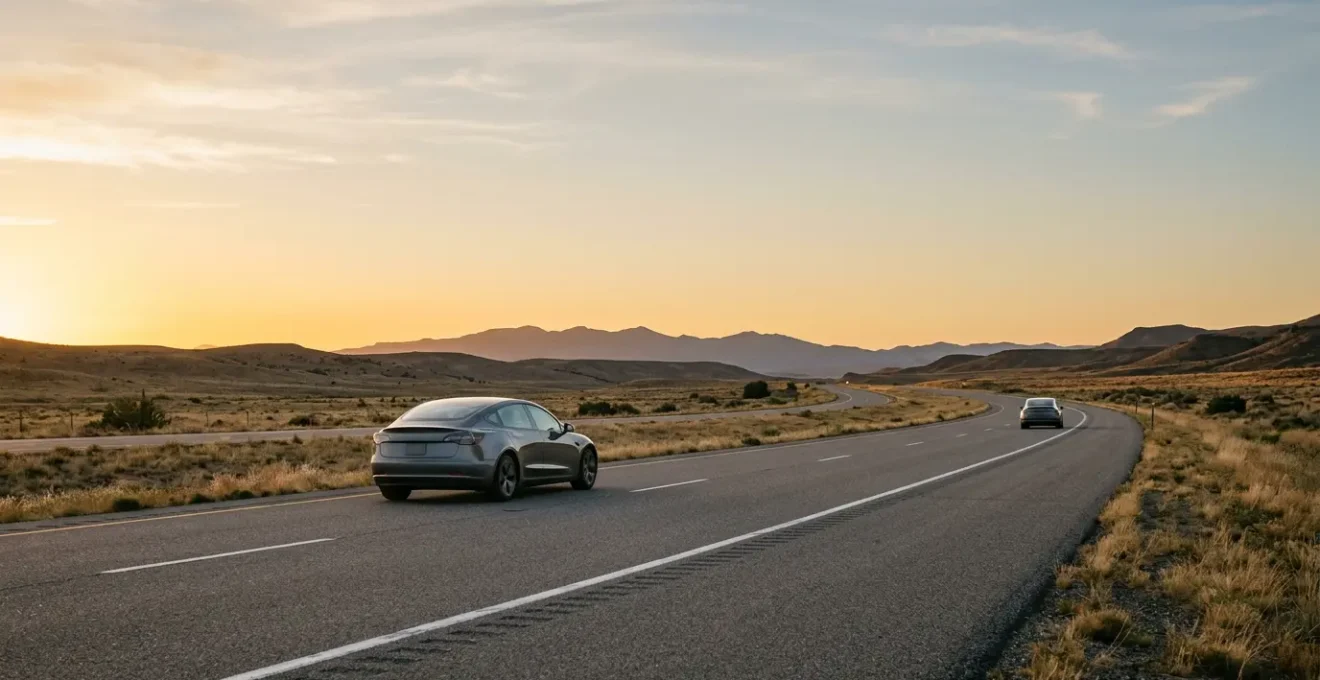
Contrary to popular belief, achieving exceptional fuel economy isn’t about driving slowly; it’s about mastering your engine’s efficiency and conserving momentum.
- Brisk acceleration to your target speed is often more efficient than gentle acceleration due to reduced engine « pumping losses. »
- Anticipating traffic 10 seconds ahead to avoid braking is more impactful than almost any other single technique.
Recommendation: On your next drive, focus on one thing: lifting off the accelerator far earlier than you normally would for traffic lights and junctions, aiming to arrive without using the brake pedal.
Ever followed a car identical to yours and wondered how the driver seems to glide effortlessly while you’re constantly on the throttle and brake? You see the official manufacturer MPG figures—say, 45 MPG—and feel a sense of achievement if you get close. Yet, a small community of drivers consistently extracts 20%, 30%, or even 40% more, seemingly defying the laws of physics. They aren’t hypermiling extremists coasting downhill with the engine off; they are simply applying a deeper understanding of how a car actually uses energy.
The common advice is a litany of vague instructions: « drive smoothly, » « avoid harsh acceleration, » « check your tyres. » While not wrong, these are the equivalent of telling an aspiring chef to « use good ingredients. » They miss the fundamental techniques and the ‘why’ behind them. The real key to unlocking staggering fuel economy lies in a set of counter-intuitive principles that govern engine load, aerodynamic drag, and, most importantly, the conservation of momentum. It’s about thinking like a physicist managing a moving object, not just a driver operating a machine.
This guide will deconstruct the myths and teach you the core principles that separate average drivers from eco-driving masters. We will explore why being ‘gentle’ can be wasteful, how to use your eyes to save more fuel than your right foot, and how to plan your journeys to defeat the single biggest enemy of fuel efficiency: the cold start. By the end, you will have a clear, actionable toolkit to start saving significant money and reducing your emissions on every single journey, without changing your car.
This article breaks down the essential techniques used by expert eco-drivers. The following summary outlines the key principles we will cover to help you transform your fuel consumption.
Summary: Unlocking Your Car’s True Fuel Potential
- Why Gentle Acceleration Wastes More Fuel Than Brisk Acceleration to Target Speed?
- How to Use the 10-Second Anticipation Rule to Reduce Brake Pedal Use by 30%?
- Cruise Control or Active Foot: Which Actually Saves More Fuel on British A-Roads?
- Why Driving at 70 MPH Uses 25% More Fuel Than 60 MPH on the Same Journey?
- How Combining 3 Short Errands Into 1 Trip Saves 40% of the Fuel Used?
- How to Leave 15 Minutes Later Yet Arrive at the Same Time Using Traffic Prediction?
- Why Driving at 80 MPH Uses 50% More Battery Than 60 MPH on the Motorway?
- How Do Some EV Drivers Get 300 Miles From a Battery Rated at 250?
Why Gentle Acceleration Wastes More Fuel Than Brisk Acceleration to Target Speed?
It’s one of the most ingrained yet misunderstood pieces of driving advice: accelerate as gently as possible to save fuel. While avoiding « boy racer » starts is wise, overly gentle acceleration is often highly inefficient. The reason lies in a concept called pumping losses. When you’re barely touching the accelerator, the throttle plate in your engine’s air intake is mostly closed. The engine pistons then have to work like a syringe pulling against a blocked end, creating a vacuum that wastes significant energy just to draw air in. In fact, research shows that pumping losses represent up to 27% of an engine’s friction power.
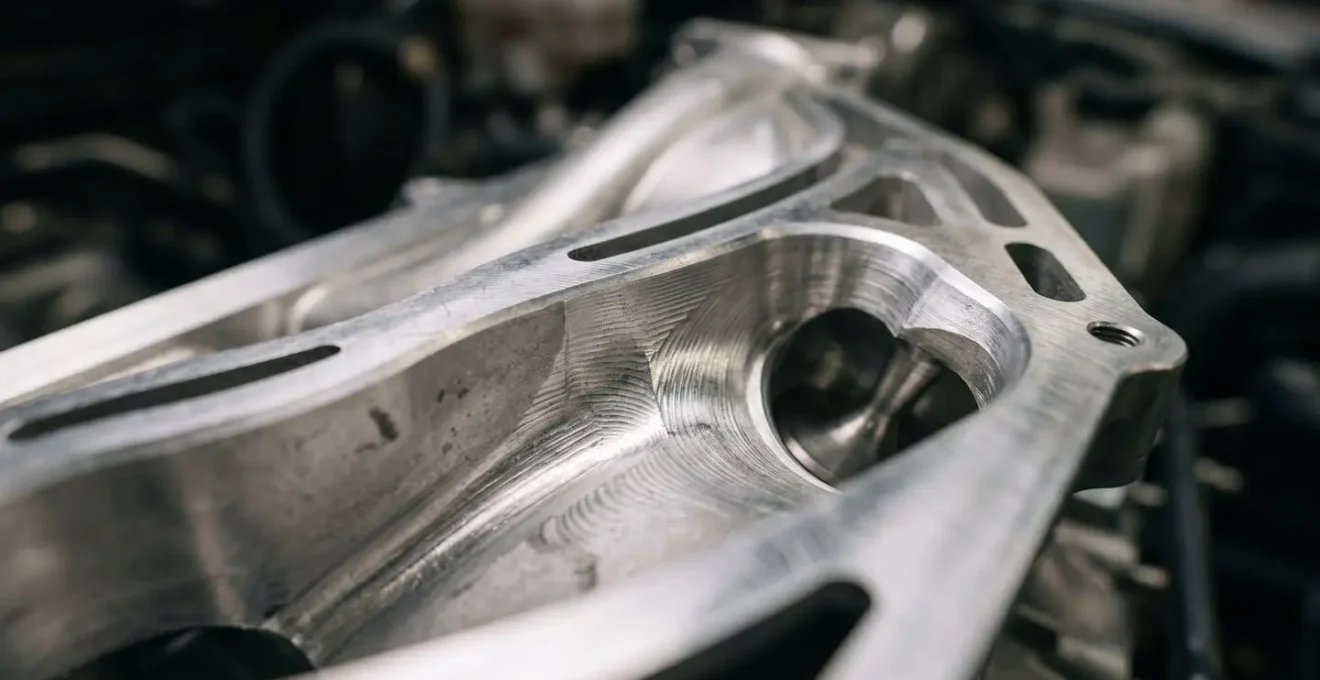
By accelerating more briskly—around 50-75% throttle—you open the throttle plate wider. This dramatically reduces the vacuum and allows the engine to breathe freely, converting fuel into motion much more efficiently. The goal is not to redline the engine, but to get to your target cruising speed efficiently and then shift into the highest possible gear. An engine operating under a moderate load is in its ‘sweet spot’ for thermal efficiency. This is where it extracts the most energy from each drop of fuel. The mantra should be: accelerate briskly up to speed, then maintain it with the lightest possible touch.
How to Use the 10-Second Anticipation Rule to Reduce Brake Pedal Use by 30%?
If there is a single « golden rule » of eco-driving, this is it. Every time you press the brake pedal, you are wasting energy. You’ve spent expensive fuel to build up kinetic energy (your car’s momentum), and the brakes convert that precious energy into useless heat. The key to phenomenal MPG is to preserve momentum at all costs. The 10-Second Anticipation Rule is a simple but powerful way to achieve this. It means constantly scanning the road far ahead—at least 10 seconds in front of you—to identify situations that will require you to slow down.
Is there a red light in the distance? A junction ahead? A slower-moving vehicle? Instead of waiting until the last moment to brake, you lift off the accelerator immediately. This engages engine braking, where a modern fuel-injected engine cuts fuel supply completely, meaning you are using zero fuel. The goal is to time your arrival at the obstacle perfectly. Ideally, you coast up to the traffic light just as it turns green, or you arrive at the roundabout with a clear path, allowing you to flow through without ever coming to a complete stop. This single habit fundamentally changes your driving from a reactive series of stops and starts to a smooth, efficient management of momentum.
To master this, focus on these core actions:
- Look far ahead: Constantly scan for traffic signals, intersections, and changes in traffic flow well in advance.
- Monitor brake lights: Watch the brake lights two or three cars ahead, not just the one directly in front, and ease off the accelerator preemptively.
- Coast early: When you spot a red light, begin coasting immediately. On modern engines, keep the car in gear to activate the fuel cut-off mode.
- Time your arrival: Adjust your coasting speed to flow through junctions and roundabouts without stopping, maintaining that valuable momentum.
Cruise Control or Active Foot: Which Actually Saves More Fuel on British A-Roads?
Cruise control is often touted as a fuel-saving hero, and on a perfectly flat motorway, it is. It can maintain a set speed with more precision than most human drivers, eliminating the tiny, wasteful throttle adjustments that creep into long journeys. However, on the rolling hills and variable conditions typical of British A-roads and many motorways, cruise control can become an aggressive fuel-waster. It has one simple objective: maintain the set speed, regardless of terrain. This means it will often apply significant throttle to charge up a hill, only to potentially brake on the other side, fighting gravity both ways.
A skilled driver using an « active foot » does the opposite. They will anticipate a hill and may build a little momentum beforehand, then allow the car to naturally and gradually lose 5-10 MPH on the way up, using minimal throttle. At the crest, they ease off completely, letting gravity do the work to regain the lost speed for free on the descent. This technique, a core part of the « Pulse and Glide » method, keeps the engine out of high-load, inefficient states and maximises « free » momentum. For a real-world demonstration of this principle, consider the following case.
Case Study: The 93 MPG Prius
Hypermiling expert Wayne Gerdes achieved a Guinness World Record by averaging 93.158 MPG in a stock Toyota Prius. His primary method was the « pulse-and-glide » technique, which is the ultimate expression of an active foot. It involves accelerating briskly (pulse) within the engine’s most efficient range, then coasting (glide) to a lower speed, and repeating the cycle. This keeps the engine either in its peak efficiency zone or using zero fuel, a feat impossible for standard cruise control.
The choice between cruise control and an active foot depends entirely on the driving environment. The following table breaks down when to use each approach for maximum fuel savings.
| Driving Condition | Cruise Control Performance | Active Foot (Skilled Driver) Performance | Recommended Approach |
|---|---|---|---|
| Flat motorway | Excellent – maintains consistent speed with minimal throttle variation | Good – but requires constant attention, minimal benefit over cruise | Use cruise control for consistency |
| Rolling hills (A-roads) | Poor – aggressively applies throttle uphill, may brake downhill, fights gravity | Excellent – allows speed to bleed 5-10 mph uphill, regains momentum downhill for free | Use active foot, disable cruise |
| Variable traffic | Not applicable – requires driver intervention | Excellent – anticipate speed changes, coast early, minimize braking | Active foot essential |
| Highway curves | Inefficient – maintains speed through corners requiring extra energy | Efficient – gentle lift before curves, natural momentum management | Active foot preferred |
Why Driving at 70 MPH Uses 25% More Fuel Than 60 MPH on the Same Journey?
The difference between driving at 60 MPH and 70 MPH feels minimal. On a 60-mile journey, it saves you less than 9 minutes. However, the fuel penalty for those few minutes is enormous. The primary reason is aerodynamic drag. This is the force of the air pushing against your car, and it’s the single biggest hurdle to efficiency at motorway speeds. Crucially, this force doesn’t increase in a straight line; it increases with the square of your speed. This means doubling your speed from 30 MPH to 60 MPH doesn’t double the drag, it quadruples it.

The power required from your engine to overcome that drag is even more punishing. Because power is force multiplied by velocity, the physics demonstrates that power to overcome drag grows with the cube of speed. This exponential relationship means that small increases in speed at the top end have a disproportionately large impact on fuel consumption. The jump from 60 MPH to 70 MPH (a 17% increase in speed) requires approximately a 60% increase in power to fight the wind. For most cars, this results in a fuel consumption penalty of around 20-25%. On your dashboard, you are paying for speed with a currency that inflates exponentially.
How Combining 3 Short Errands Into 1 Trip Saves 40% of the Fuel Used?
The most fuel-intensive part of any journey is the first few minutes. When your engine is cold, it is desperately inefficient for two main reasons. First, the engine control unit (ECU) deliberately runs a « rich » fuel mixture—more fuel than is necessary for combustion—to ensure smooth running and to heat the catalytic converter to its operating temperature as quickly as possible. Second, the engine oil is cold and thick, creating significantly more internal friction that the engine must overcome. This is known as the cold start penalty.
Making three separate short trips—to the post office, then the supermarket, then the bank—means you incur this severe penalty three times over. On a short 2-3 mile trip, a cold engine can use almost double the fuel it would if it were already warm. An analysis of this effect is stark; comprehensive testing revealed that cold start penalties on urban driving cycles could be as high as 21.8%. By chaining these errands into a single, longer trip, the engine only has to go through the inefficient warm-up phase once. After the first stop, the engine and catalytic converter remain warm, meaning the subsequent legs of your journey are completed with the engine operating in its far more efficient warm state.
Study: The Slow Warm-Up and Its Fuel Cost
Research on engine efficiency found that as a diesel engine’s coolant warmed from 25°C to 60°C, its specific fuel consumption decreased by up to 10%. Crucially, the oil temperature lagged behind, and internal friction only dropped by 60% once the engine was fully at operating temperature. Each cold start resets this entire process, multiplying the inefficiency and making trip chaining one of the most effective fuel-saving strategies available.
How to Leave 15 Minutes Later Yet Arrive at the Same Time Using Traffic Prediction?
The absolute worst environment for fuel economy is stop-and-go traffic. You spend fuel to accelerate, only to immediately burn it off as heat in your brakes, making almost zero progress. Your effective MPG plummets. Many commuters assume that leaving earlier is the only way to beat the rush, but often the smartest move is to leave slightly later, travelling « behind the wave » of peak congestion. This is where modern traffic prediction tools like Google Maps and Waze become powerful eco-driving aids.
Instead of just hitting « Navigate, » use the « Depart at » or « Arrive by » feature. This allows you to see how a 15-minute delay in your departure can dramatically alter your journey time. You might find that leaving at 7:30 AM results in a 45-minute journey full of traffic, while leaving at 7:45 AM results in a 30-minute journey with free-flowing traffic. You arrive at the same time, but you’ve saved 15 minutes of idling, braking, and re-accelerating, which translates into huge fuel savings. As leading researchers note, this is the single worst condition for a vehicle.
The worst possible condition for fuel economy is stop-start traffic, which can result in an effective MPG of nearly zero.
– University of Belgrade Eco-Driving Researchers, Hypermiling Research on Economical Driving Techniques
By consciously choosing to avoid the peak of the traffic wave, you trade a few minutes at home for a faster, cheaper, and less stressful journey. This strategic planning turns your navigation app from a simple map into a sophisticated fuel-saving tool.
Your Action Plan: Audit Your Commute for Traffic Waves
- Identify the wave: Use the « Depart at » function in Google Maps or Waze to check predicted travel times for different departure slots (e.g., 7:15, 7:30, 7:45 AM). Note the time when the journey duration is longest—this is your peak wave.
- Test the theory: For one week, try departing 15 minutes *after* the identified peak. Record your actual journey time and compare it to your usual commute.
- Track your fuel: Monitor your car’s trip computer or use an app to see the MPG difference between a « peak wave » commute and a « behind the wave » one.
- Analyse alternative routes: Check if a slightly longer route in miles might be significantly faster and more efficient by avoiding major congestion points altogether.
- Set your optimal time: Based on your tests, establish a new, permanent departure time that provides the best balance of journey time and fuel efficiency.
Key Takeaways
- Driving technique matters more than the car’s sticker MPG. Understanding physics is key.
- Momentum is your most valuable asset. Every time you brake, you are spending money.
- Speed is exponentially expensive. The small time savings from driving at 70 vs 60 MPH come at a huge fuel cost.
Why Driving at 80 MPH Uses 50% More Battery Than 60 MPH on the Motorway?
If aerodynamic drag is the enemy of petrol and diesel cars, it is the arch-nemesis of Electric Vehicles (EVs). While internal combustion engines (ICE) have varying efficiency curves, an electric motor is highly efficient across a wide range of speeds. This means there’s no « inefficient » low-speed operation to mask the effects of drag. In an EV, the energy consumption needed to fight air resistance is laid bare on your range display. The same « cube of speed » law applies: the power needed to push through the air skyrockets with speed.

The consequence for EV range is brutal. While an ICE car becomes 25% less efficient, an EV can lose 40-50% of its potential range. This is because at 60-80 MPH, nearly all the battery’s energy is going towards fighting the wind, not simply rolling the car along. Real-world tests confirm this dramatic drop-off; extensive real-world EV testing demonstrated that all tested vehicles lost around 40% of their range when driven at a constant 80 MPH compared to mixed driving. For an EV driver, choosing to drive at 60 MPH instead of 70-80 MPH isn’t a minor tweak—it’s the difference between reaching your destination or facing an unscheduled charging stop.
Case Study: The Porsche Taycan’s 75-Mile Speed Penalty
In controlled tests, a Porsche Taycan 4 saw its achievable range plummet by 75 miles when increasing its speed from 60 MPH to 80 MPH in cold weather. The energy consumption was so much higher that the time saved by driving faster was completely wiped out by the need for an extra, lengthy charging stop that would have been unnecessary at the lower speed. This perfectly illustrates the EV driver’s dilemma: speed doesn’t just cost energy, it costs significant time.
How Do Some EV Drivers Get 300 Miles From a Battery Rated at 250?
Just as with combustion cars, the official WLTP range for an EV is a standardised figure, not a limit. Expert EV drivers consistently exceed these ratings by applying the same core principles of energy management, but adapted for electric powertrains. Their secret is a relentless focus on two areas: maximising regenerative braking and minimising auxiliary consumption. They treat the battery as a finite resource and make conscious decisions to conserve every possible watt-hour of energy.
Mastering one-pedal driving is the first step. This isn’t just about letting the car slow itself down; it’s about anticipating stops so perfectly that you lift off the accelerator at the precise moment to come to a halt without ever touching the friction brakes. This ensures the maximum possible amount of kinetic energy is converted back into battery charge. The second area is climate control discipline. Cabin heating is one of the biggest energy drains on an EV. Smart drivers rely on heated seats and steering wheels, which use a fraction of the energy, and they pre-condition the car’s cabin while it’s still plugged into the charger. These techniques, combined with others, turn driving into a strategic game of energy conservation.
Here are the advanced techniques they use to stretch every charge:
- Master one-pedal driving: Lift off the accelerator at the perfect moment to coast to a stop, using regenerative braking exclusively and avoiding friction brakes.
- Practice climate control discipline: Use heated seats and the steering wheel instead of heating the entire cabin. Always pre-condition the car while it’s plugged in.
- Optimise tyres: Choose EV-specific low rolling resistance tyres and maintain them at the optimal pressure for efficiency.
- Plan topography-aware routes: Use apps like ‘A Better Routeplanner’ to find routes that are flatter, even if they are slightly longer in distance.
- Control highway speed: Limit cruising speed to a maximum of 65 MPH on motorways to stay out of the severe aerodynamic drag penalty zone.
By integrating these principles—from managing engine load to trip chaining and controlling your speed—you fundamentally change your relationship with your vehicle. You are no longer just a passive operator but an active manager of energy. Start by picking just one of these techniques for your next journey. Focus on anticipation to avoid braking, or simply reduce your motorway speed by 10 MPH. The immediate, tangible feedback on your fuel gauge or range display is the most powerful motivator to continue. To put these concepts into practice, the next logical step is to consciously apply them and observe the results for yourself.