Your car’s blind spot detection system isn’t faulty; it’s interpreting the unique geometry of UK roads based on a fixed set of rules designed for wide, straight highways.
- False alerts are often not errors, but logical responses to objects like guardrails, cars in adjacent lanes, or the tight confines of B-roads that fit the sensor’s pre-programmed « threat » criteria.
- System performance is directly affected by sensor quality (premium vs. budget), weather conditions, and the « geographic data bias » of its programming.
Recommendation: Instead of distrusting the light, learn to understand its operational language. This allows you to use it as a valuable co-pilot, verifying its alerts with a quick mirror and shoulder check to become a safer, more informed driver.
That familiar orange light flashes in your wing mirror. You instinctively check, but there’s nothing there. Or perhaps, it triggers for a car two lanes away on the M25, yet stays stubbornly dark for the hatchback hovering just off your rear quarter. This experience is unnervingly common for UK drivers, leading to a critical erosion of trust in a key safety feature. The default assumption is that the system is dirty, faulty, or simply not very good. You might be told to clean the sensors or that it’s just the rain interfering.
While these factors play a part, they are rarely the whole story. The constant beeping on a narrow British B-road or the seemingly random alerts in city traffic aren’t typically signs of a malfunction. In fact, they are often proof that the system is working exactly as its designers intended. The problem isn’t a fault in the technology, but a fundamental mismatch between its rigid, pre-programmed operational logic and the complex, often unpredictable reality of driving in the UK.
But what if the key wasn’t to dismiss these ‘false’ alerts, but to understand the language the sensors are speaking? The true path to building confidence in your Blind Spot Detection (BSD) system is not to hope it becomes perfect, but to decipher its logic. It’s about learning why it flags a guardrail on a sharp bend or how its « brain » is biased towards North American-style highways, making it overly cautious on our uniquely narrow lanes.
This guide will move beyond the simple « clean your sensors » advice. We will explore the core detection parameters that govern these systems, investigate how vehicle price point impacts sensor quality, and explain why weather is such a significant factor. Ultimately, we will provide a clear protocol for when to trust the light implicitly and when to use it as a cue for manual verification, transforming you from a frustrated driver into an informed partner with your car’s technology.
To navigate this complex topic, we will break down the core issues you’re likely to encounter. This article explains the technical reasons behind sensor behaviour, offers practical solutions like mirror adjustments, and compares how different systems cope with the unique challenges of UK roads.
Summary: Understanding Your Car’s ‘False’ Blind Spot Warnings
- Why Does BSD Detect the Car Two Lanes Over but Miss the One Right Next to You?
- How to Position Mirrors to Cover the Areas Blind Spot Detection Misses?
- Budget Hatchback or Premium SUV: Does More Expensive Mean Better Blind Spot Detection?
- The Weather Condition That Blinds Your Blind Spot Sensors for 30% of Winter Journeys
- When to Trust the Light and When to Turn Your Head: The BSD Verification Protocol?
- Tesla Autopilot, BMW Driving Assistant, or Mercedes Drive Pilot: Which Handles UK Roads Best?
- Why Does Lane Keeping Work Perfectly on Motorways but Fail on Country Lanes?
- Why Does Your Lane Warning Beep Constantly on Narrow British B-Roads?
Why Does BSD Detect the Car Two Lanes Over but Miss the One Right Next to You?
The most confusing behaviour of a Blind Spot Detection (BSD) system is its apparent inconsistency. This paradox—detecting a distant car while ignoring a closer one—isn’t a glitch. It’s a direct result of the system’s core operational logic, which prioritises closing speed over mere proximity. Your car is primarily programmed to warn you about vehicles that are actively entering your blind spot at a significant speed, as this poses the most immediate threat during a lane change. A car that has been travelling parallel to you at the same speed for several miles is often filtered out by the system’s logic as a non-threatening, static part of the environment.
A foundational study by the US Department of Transportation confirmed this behaviour. Testing production vehicles, they found that BSM systems struggled to detect slower-moving traffic travelling in the same direction. The systems excelled at flagging fast-approaching vehicles, but the changing differential speed had a noticeable effect on when the warning would activate and deactivate. Most systems have a built-in speed difference limitation; they are designed to be most effective when the speed difference between your car and the other vehicle is below a certain threshold, often around 30 mph.
This programming has other blind spots. The system’s parameters are optimised for car-sized objects, which can lead to another set of inconsistencies. As the My Car Does What safety initiative points out, this focus can be a critical weakness:
Some blind spot warnings are not optimized to detect motorcycles, bicycles or pedestrians.
– My Car Does What Safety Initiative, Blind Spot Warning System Limitations
Therefore, a cyclist filtering through traffic or a motorcycle accelerating rapidly might not trigger the alert reliably. The system isn’t ‘missing’ them; rather, these objects don’t fit the precise shape and motion profile the sensor is programmed to identify as a threat. Understanding this helps you know what to look for yourself.
How to Position Mirrors to Cover the Areas Blind Spot Detection Misses?
While BSD technology is a powerful safety net, it should never fully replace the original, analogue detection system: your mirrors. The frustrating reality is that many drivers position their wing mirrors incorrectly, creating large blind spots that force an over-reliance on electronic aids. The common method—adjusting the mirror so you can see the side of your own car—is fundamentally flawed. The side of your car never poses a threat. The goal is to create a seamless panoramic view, where a passing vehicle transitions from your rearview mirror, to your side mirror, to your peripheral vision with no gap.
This is achieved using the Blindzone/Glare Elimination (BGE) method, a technique developed decades ago to provide full coverage. As documented in engineering papers, its effectiveness is a matter of physics, not opinion. An article on Wikipedia, referencing a 1995 paper for the Society of Automotive Engineers, states that » if side view mirrors on a car are adjusted properly, there is no blind spot on the sides. » This simple, no-cost adjustment is the single most effective way to augment your car’s electronic sensors and cover the areas they are weakest, such as when monitoring vehicles travelling at a similar speed.
Correctly setting your mirrors provides a constant, reliable source of information that works in all weather and for all types of road users, including the cyclists and motorcyclists that electronic systems can miss. It’s a foundational driving skill that enhances the effectiveness of any built-in technology.
Your Action Plan: The BGE Method for Zero Electronic Blind Spots
- Set the Rearview Mirror: From your normal driving position, adjust the interior rearview mirror so you have a complete, centred view directly out of the rear window.
- Prepare for the Left Mirror: Lean your head towards the driver’s side window until it almost touches the glass. This is a temporary position for adjustment only.
- Adjust the Left Mirror: From this leaned position, adjust the left wing mirror outwards until you can just barely see the edge of your car’s rear flank disappear from view.
- Prepare for the Right Mirror: Return your head to your normal driving position and then lean to the centre of the car, as if your head is directly between the two front seats.
- Adjust the Right Mirror: From this central position, adjust the right wing mirror outwards until you can just see the edge of the passenger side of your car.
- Verify the Setup: The next time you are on a multi-lane road, watch a vehicle pass you. It should appear in your rearview mirror, then as it leaves the rearview, it should instantly appear in the corresponding side mirror. As it leaves the side mirror, you should pick it up in your peripheral vision. There should be no gap.
Budget Hatchback or Premium SUV: Does More Expensive Mean Better Blind Spot Detection?
It’s a reasonable assumption: a more expensive car should come with superior technology. When it comes to Blind Spot Detection, this is largely true, but the difference isn’t just about brand prestige. It’s about the quality and sophistication of the underlying hardware—the radar or camera sensors themselves. Not all BSD systems are created equal. This technology is still considered an optional extra on many vehicles rather than a universal standard. This variance in adoption means there’s also a vast variance in component quality across the market.
The sensors on a budget hatchback are often lower-frequency, short-range radar units that perform the basic function but with a wider margin of error. They are more susceptible to ‘noise’ from the environment, leading them to flag guardrails or signs more frequently. In contrast, a premium vehicle is more likely to use higher-frequency, multi-beam radar or even a fusion of radar and camera data. This sensor fusion allows the car’s computer to cross-reference information, providing a much higher-fidelity picture of the environment. It can better distinguish between a genuine vehicle and a stationary object, track multiple targets simultaneously, and offer more accurate warnings about closing speeds.

The physical components themselves tell a story of this quality gap. As the image above illustrates, the precision engineering, materials, and internal complexity of an advanced automotive radar sensor are worlds apart from a basic unit. A premium sensor has a more refined « understanding » of the world, with detection parameters that are more nuanced. It’s less about simply detecting an object and more about identifying its trajectory, size, and classification. So yes, paying more generally does get you a more reliable and less « chatty » blind spot system, because you are fundamentally paying for a more intelligent and discerning sensor.
The Weather Condition That Blinds Your Blind Spot Sensors for 30% of Winter Journeys
For a significant portion of the year in the UK, drivers face conditions that can partially or completely disable their car’s advanced safety systems: winter weather. Snow, ice, mud, and road salt are the Achilles’ heel of BSD sensors. These systems rely on a clear, unobstructed « view » of their surroundings, and a physical blockage is something no amount of software sophistication can overcome. When the sensor, typically located in the rear bumper or behind the wing mirror housing, is caked in grime or snow, its ability to function is severely compromised.
This isn’t a minor degradation. The impact is significant and measurable. Technical research from radar engineers shows that heavy rain or snow can reduce detection range from a typical 100 metres in clear weather down to just 60-70 metres. If the sensor is physically blocked, the range drops to zero. As the technical team at ADAS Calibrate warns, « Radar or camera-based blind spot systems can be blocked by snow, mud, or excessive dirt. This can lead to inconsistent alerts or total system shutdown until the sensors are cleared. » Your car will often display a warning message like « Blind Spot Assist Inoperative, » but sometimes it may simply fail silently.
A real-world investigation by Consumer Reports highlighted just how common this issue is. They documented that during winter conditions, safety sensors on bumpers and grilles frequently become blocked, causing critical systems to shut down. While some manufacturers like Volvo have cleverly relocated forward-facing sensors to within the windscreen’s wiper-swept area, the crucial blind spot sensors remain exposed on the vehicle’s exterior. This makes them inherently vulnerable. During a typical UK winter, with its mix of sleet, snow, and salted roads, it’s reasonable to assume your BSD system is operating at a reduced capacity or not at all for a large number of journeys, reinforcing the need for manual checks.
When to Trust the Light and When to Turn Your Head: The BSD Verification Protocol?
After understanding the system’s limitations, it’s easy to become cynical and simply ignore the light altogether. This would be a mistake. Despite their quirks, these systems are proven life-savers. Analysis of deployment data demonstrates that blind spot technology contributes to a 23% reduction in lane-change injury crashes. The key is not to dismiss the system, but to develop a mental « verification protocol »—a clear understanding of when to trust the alert and when to treat it as a suggestion that requires confirmation. This protocol is based on a dynamic confidence score you assign to the system based on your current driving environment.
In dense, slow-moving urban traffic (20-35 mph), for example, your confidence in the system should be high. This is the optimal operating environment for most sensors, where speed differentials are low and detection is most reliable. An alert here warrants immediate attention. Conversely, in heavy rain or on a grimy winter road, your confidence score should be low. You should assume the system is compromised and revert to a full, manual verification process for every manoeuvre: rearview mirror, side mirror, and a shoulder check.
This situational approach allows you to partner with the technology effectively. The light becomes an invaluable co-pilot, drawing your attention to a potential hazard, which you then confirm based on the context. The following table, based on an analysis from sources like Consumer Reports, provides a structured framework for this decision-making process.
| Driving Scenario | BSD Reliability Level | Recommended Verification Protocol | Rationale |
|---|---|---|---|
| High-Speed Motorway (55+ mph) | Medium | BSD alert + Mirror check + Mandatory shoulder check | Fast differential speeds can exceed system detection range |
| Dense Urban Traffic (20-35 mph) | High | BSD alert + Quick mirror confirmation | Optimal speed range for sensor performance |
| Parking/Reversing (0-10 mph) | Low-Medium | Visual check primary, BSD as secondary confirmation | Some systems less sensitive at very low speeds |
| Heavy Rain/Snow Conditions | Low | Assume system compromised, full manual verification | Sensor blockage common, system may disable without warning |
Tesla Autopilot, BMW Driving Assistant, or Mercedes Drive Pilot: Which Handles UK Roads Best?
The performance of any Advanced Driver Assistance System (ADAS), whether it’s a simple lane warning or a sophisticated semi-autonomous suite like Autopilot, is profoundly influenced by the data on which it was ‘trained’. This concept of geographic data bias is central to understanding why some systems feel perfectly intuitive in one country and clumsy or erratic in another. A system extensively tested and refined on the wide, grid-like highways of California will have a fundamentally different ‘understanding’ of road etiquette than one trained in the tight, chaotic confines of European city centres.
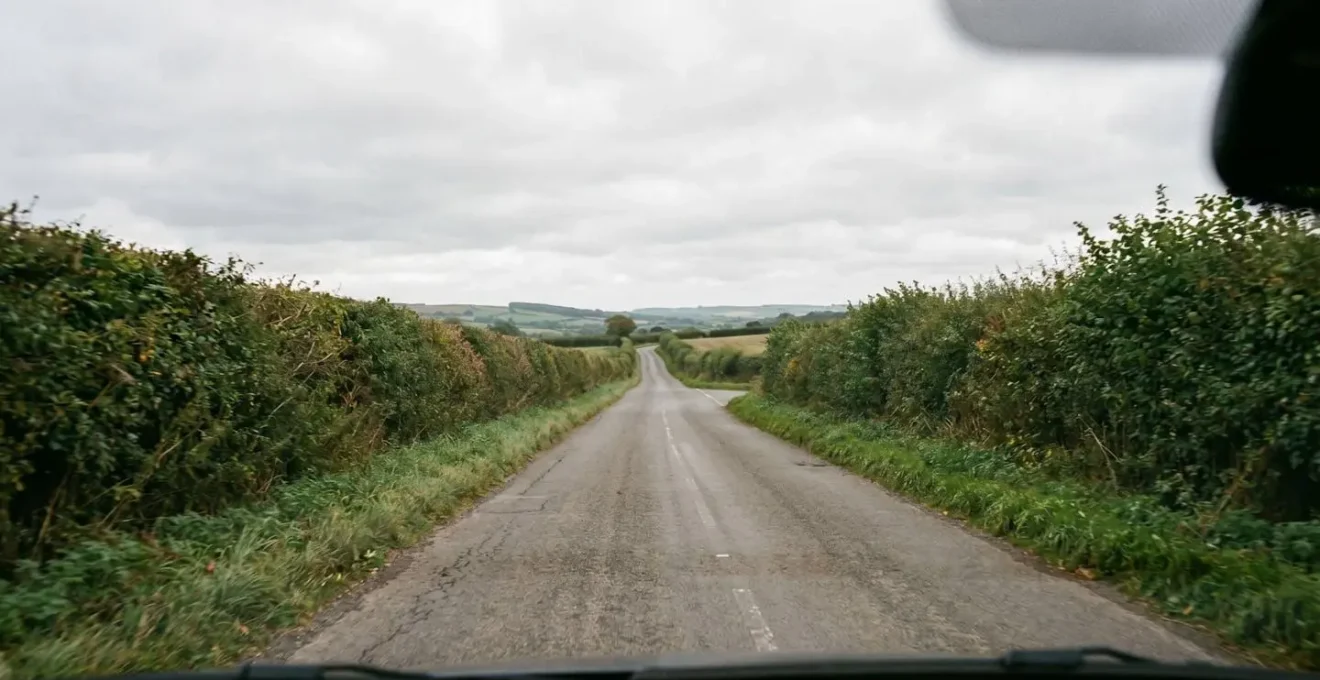
This is particularly relevant for UK drivers. Our road network, with its narrow country lanes, unique roundabout conventions, and often poorly maintained markings, presents a massive challenge for systems designed with more uniform environments in mind. A system’s operational logic is built on a library of scenarios. If its library is full of four-lane interstates, it may struggle to classify a single-track road with passing places or interpret the faded, inconsistent lines of a rural B-road.
This data bias explains why different brands can exhibit such different personalities on UK roads. As a research analysis on driver assistance systems notes, this training is key:
Systems are ‘trained’ on data. A system heavily trained on wide, grid-like North American roads may have a different ‘understanding’ of road etiquette and geometry than a system heavily trained in Europe, leading to different behaviours on narrow roads with unique markings.
– Automotive ADAS Research Analysis, Geographic Data Bias in Driver Assistance Systems
While it’s difficult to definitively crown one system « the best, » brands with a strong European R&D presence, like BMW, Mercedes, and the broader VW Group, often exhibit a more nuanced and confident performance on UK roads. Their systems have been trained on a data set that more closely resembles our driving reality. This doesn’t make them infallible, but it can make their interventions feel more appropriate and less alarming than systems primarily developed for the North American market.
Why Does Lane Keeping Work Perfectly on Motorways but Fail on Country Lanes?
Lane Keeping Assist Systems (LKAS) offer a perfect illustration of the principle of operational confidence. On a motorway, the system is in its element. It has clear, consistent, well-maintained lane markings on either side, a predictable road width, and gentle curves. In this environment, its detection parameters are easily met. The forward-facing camera can clearly see the lines, calculate the car’s position relative to them, and apply gentle steering torque to keep you centred. Its ‘confidence score’ is at 100%.
Take that same system onto a winding country lane, and its confidence plummets. The lane markings may be faded, covered in mud, or disappear entirely into a junction or around a tight, hedge-lined bend. The road width is inconsistent. The camera struggles to find the reliable reference points it needs. When it can’t « see » the lines with a high degree of certainty, the system will either disengage (often with a chime and a dashboard warning) or, in some cases, make an incorrect assumption based on a partial reading of a cracked road edge or a tar seam. The system isn’t ‘failing’; it’s correctly identifying that the environment is outside its reliable operating parameters.
This limitation is not a secret. An Automotive World study on ADAS performance found that systems experienced failures roughly every eight miles even in clear weather. The report specifically noted that LKAS performance degrades when lane lines are obscured by snow, but the same logic applies to poor markings or low sun glare. The study concluded that susceptibility to environmental conditions is one of the biggest limitations of current ADAS capabilities. The system often disengages precisely in the complex situations where a driver might feel they need the most assistance, reinforcing its role as an ‘assistant’, not a replacement for an alert driver.
Key takeaways
- ‘False’ alerts are often logical system responses to environmental factors (guardrails, narrow lanes) that fit its threat-detection parameters.
- System reliability is not uniform; it depends on sensor quality (premium vs. budget), weather, and its ‘geographic data bias’.
- The BGE mirror adjustment method is a vital, no-cost way to eliminate physical blind spots and supplement electronic aids.
Why Does Your Lane Warning Beep Constantly on Narrow British B-Roads?
If you’ve ever felt that your car is nagging you with constant lane departure warnings on a typical British B-road, you are experiencing a direct conflict between the car’s programming and the UK’s infrastructure. The incessant beeping isn’t a sign of a hypersensitive or faulty system. It is the logical and predictable outcome of a system calibrated for a world of much wider roads. The car is, in effect, constantly telling you that you are too close to the edge of what it considers a ‘safe’ lane.
Driver assistance systems are built around a set of core assumptions, and one of the most fundamental is lane width. According to technical specifications for these systems, the detection parameters for lane warnings are often based on typical highway lane widths of 12-15 feet (approximately 3.6 to 4.5 metres). This is the standard for North American and many European motorways. However, many UK A- and B-roads are significantly narrower, often falling below 3 metres, with no hard shoulder and encroaching hedgerows. When you drive on these roads, you are physically unable to maintain the central position the car’s software deems ‘correct’.
The system’s camera sees the lane marking (or even just the road edge) and calculates that you are drifting out of the pre-defined safe zone, triggering an alert. You, the driver, know you are perfectly positioned for the road you’re on, but the car’s rigid logic only knows that a parameter has been breached. This is the essence of the ‘system dialogue’ going wrong; the car is giving accurate feedback based on its flawed, wide-lane assumptions. As the « My Car Does What » educational initiative explains simply, « The detection area of your Blind Spot Warning is based on the lane width of typical highways. Therefore, when you drive on a road with unusual lane width, your BSW may not work properly. » The same principle applies directly to lane departure warnings, creating a constant source of annoyance that tempts many drivers to disable the feature entirely.
Ultimately, the path to a safer driving experience is not to blindly trust or completely dismiss your car’s safety features. It is to build a new kind of partnership. By understanding the operational logic behind the flashing lights and beeps, you transform them from a source of frustration into a valuable, if imperfect, stream of information. Treat the alert not as a command, but as a suggestion: « I think I see something, you should probably verify. » This approach, combining the tireless vigilance of technology with your own contextual human judgment, is the true future of driving safety.