
Your car’s lane assist isn’t faulty; it’s a simple machine whose rigid logic conflicts with the intuitive driving style necessary for narrow UK B-roads.
- Motorway-designed systems rely on clear, consistent lane markings that are often absent or ambiguous on rural roads.
- Constant alerts are a predictable result of the system’s « digital brain » misinterpreting your necessary road positioning as a dangerous lane departure.
Recommendation: Instead of just disabling the system, learn to adjust its sensitivity and understand its limitations to transform it from an annoyance into a cooperative safety partner.
You know the feeling. You’re navigating a beautiful but typically narrow British B-road, positioning your car perfectly to account for verges, potholes, and oncoming traffic. Suddenly, a frantic beeping erupts from the dashboard, accompanied by a vibrating steering wheel. The car thinks you’re about to crash, but you know you’re driving safely. This frustrating experience, common to many modern UK drivers, often leads to the same reaction: find the button to turn the lane-keeping system off. While this restores peace, it also disables a potentially life-saving feature.
The common advice to simply deactivate the system misses the crucial point. The issue isn’t that your Advanced Driver Assistance System (ADAS) is broken. It’s that its simple, rule-based logic was born on the pristine, predictable lines of a motorway. This « digital brain » struggles to comprehend the nuanced, adaptive driving style that winding country lanes demand. The constant beeping isn’t a malfunction; it’s a fundamental logic conflict between machine programming and human intuition.
But what if, instead of fighting the machine, you could understand its thinking? This guide moves beyond the « on/off » debate. We will dissect the system’s logic, explore why it excels in some environments and fails in others, and provide concrete steps to manage its behaviour. By learning to work *with* your car’s safety features, you can reduce false alarms, minimise distractions, and reclaim your driving sanity without sacrificing the safety net they provide.
This article will guide you through understanding and mastering your vehicle’s lane support systems. We will explore the technical reasons for their behaviour, practical adjustment methods, and the crucial role of driver responsibility in this new era of assisted driving.
Summary: Understanding and Managing Your Car’s Lane Assist System
- Why Does Lane Keeping Work Perfectly on Motorways but Fail on Country Lanes?
- How to Reduce False Lane Warnings Without Completely Disabling the System?
- Warning Beep or Steering Intervention: Which Lane System Actually Prevents Accidents?
- The Repeated Lane Warning That Signals You Need to Stop for a Coffee Break
- When to Disable Lane Keeping in Roadworks: The Conflicting Markings Problem?
- Why Do Touchscreen Climate Adjustments Take 3x Longer Than Physical Dials?
- Why Level 2 Autonomy Still Requires Your Hands on the Wheel at All Times?
- Why Did That Driver Crash Despite Having Autopilot: Understanding the Human Responsibility?
Why Does Lane Keeping Work Perfectly on Motorways but Fail on Country Lanes?
The flawless performance of your Lane Keep Assist (LKA) on a motorway journey, followed by its incessant complaints on a country lane, is not a contradiction. It is the perfect demonstration of the system’s design parameters and its inherent limitations. These systems, as noted by automotive safety experts, are optimised for the clear, consistent environment of multi-lane highways but often trigger frequently on the very B-roads that define much of UK driving.
The core of the issue lies in the system’s ‘eyes’ and ‘brain’. A forward-facing camera, usually mounted behind the rearview mirror, scans the road for lane markings. The system’s logic is fundamentally simple: if it sees two lines, it will try to keep the car centred between them. On a motorway, with its well-maintained, bright white lines and wide lanes, this task is straightforward. The system operates within its ‘calibration zone’, performing as intended.
However, a typical British B-road presents a chaotic landscape for this digital brain. As technical documentation highlights, these systems fundamentally struggle when faced with reality: faded, missing, incorrect, or overlapping lane markings. A narrow lane forces you to drive closer to the edge, which the system interprets as a lane departure. A crumbling verge, a patch of overgrown grass, or the shadow of a tree can be misinterpreted as a line or, conversely, can obscure the real one, causing the system to either panic or give up entirely. Your intuitive positioning to gain a better view around a blind corner is, to the machine, a flagrant violation of its core directive: stay in the centre of the lines it can (or cannot) see.
How to Reduce False Lane Warnings Without Completely Disabling the System?
Understanding the system’s limitations doesn’t mean you have to endure the constant beeping. Before reaching for the ‘off’ button, which is reset every time you start the car by law, you should explore the adjustment settings. Manufacturers, aware of the ‘alert fatigue’ these systems can cause, often provide ways to fine-tune their behaviour. This allows you to shift the system from being an annoyance to a cooperative partner.
The primary control you have is over the system’s sensitivity or timing. Most vehicles allow you to choose how early or late you want the warning to trigger. Setting it to a ‘Late’ or ‘Delayed’ warning means the system will only intervene when you are much closer to or actually crossing the lane line, giving you more freedom to position the car on narrow roads without triggering a false alarm. This simple adjustment can dramatically reduce unwanted alerts while keeping the safety net active for genuine moments of distraction.
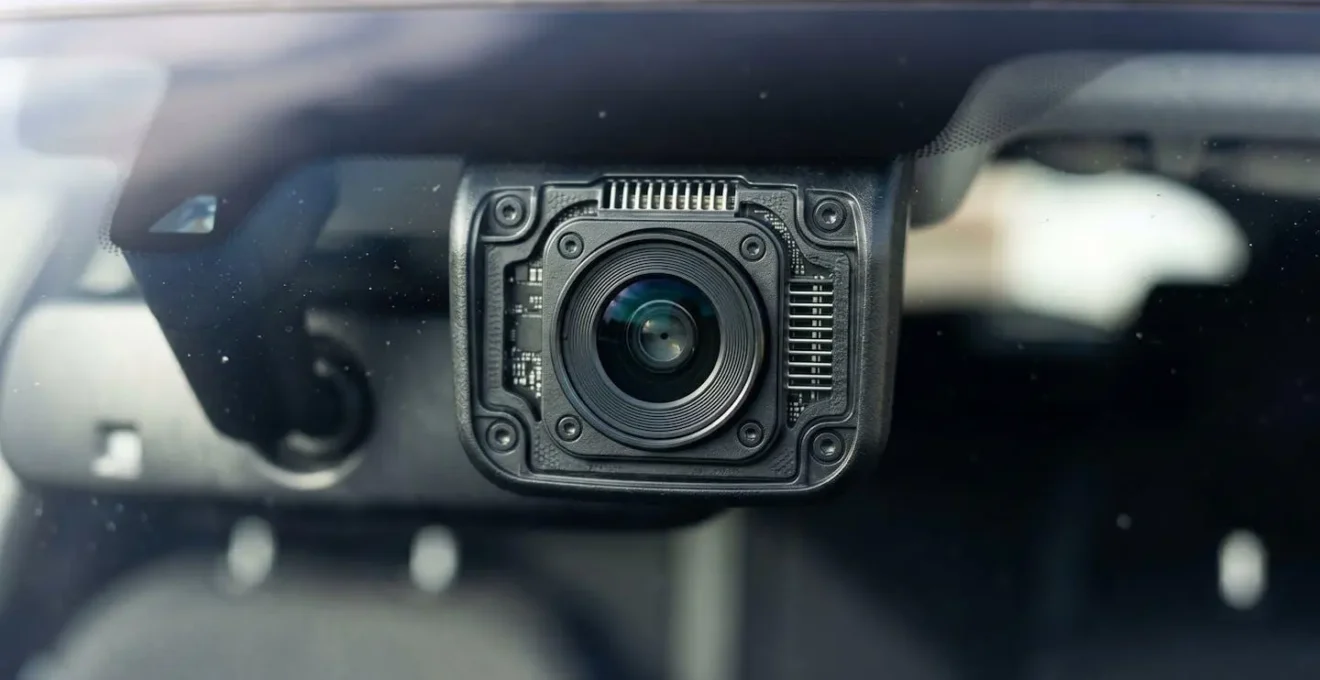
It’s also vital to ensure the system’s ‘eyes’ are clean and correctly calibrated. The camera’s view can be obscured by dirt, frost, or even a simple smear on the windscreen. Furthermore, if you’ve had a windscreen replacement, ensuring the ADAS camera is recalibrated is not just a recommendation; it is a critical safety requirement. As confirmed by UK windscreen specialists, ADAS calibration is always required after a replacement to ensure the system’s measurements are accurate down to the millimetre. A misaligned camera can be a primary cause of erratic and unreliable system performance.
Your Action Plan: Adjusting Lane Assist Sensitivity
- Locate Settings: Find the ‘Driver Assistance’ or ‘Vehicle Settings’ menu in your car’s infotainment system or via buttons on the steering wheel.
- Navigate to Lane Systems: Look for options labelled ‘Lane Keep Assist,’ ‘Lane Departure Warning,’ or ‘Lane Support’.
- Adjust Sensitivity: Change the setting from the default ‘Normal’ or ‘Early’ to ‘Late’. This often provides the best balance for UK roads.
- Test the Changes: Drive a familiar route to see how the new setting feels. You want it to be quiet during normal driving but active if you genuinely drift.
- Remember the Default: Be aware that due to safety regulations (GSR2), the system will likely revert to its default ‘on’ state each time you start the engine, though your sensitivity preference may be saved.
Warning Beep or Steering Intervention: Which Lane System Actually Prevents Accidents?
Not all lane support systems are created equal. The cacophony of beeps and nudges you experience comes from two distinct types of systems: Lane Departure Warning (LDW) and Lane Keep Assist (LKA). LDW is a passive system; it simply alerts you with an audible beep or a steering wheel vibration that you are drifting. It is an informant. LKA, and its more forceful sibling Emergency Lane Keeping (ELK), are active systems. They take a step further by applying a gentle steering input to guide the car back toward the centre of the lane.
While the steering nudge can feel intrusive, it is the active intervention that safety bodies value most. An audible alert can be missed if the driver is distracted or drowsy, but a physical steering input is a direct, tangible action to correct the vehicle’s path. For this reason, according to Euro NCAP’s official testing protocols, both LKA and ELK systems are rewarded with higher safety scores based on their performance in standardized tests. This is why manufacturers are increasingly fitting active steering systems as standard: they are proven to be more effective at preventing run-off-road and head-on collisions.
However, this effectiveness creates a new challenge: the driver experience. The feeling of the car ‘fighting’ the driver is a common complaint. As safety experts at Thatcham Research note, finding the right equilibrium is a major hurdle for the industry.
As ADAS is increasingly fitted to cars, vehicle manufacturers will need to address concerns from drivers that these systems, such as Emergency Lane Keeping Systems, interfere with their driving experience. Striking a balance between safety, performance, and integration to create systems that cooperate with drivers is a real challenge for manufacturers.
– Thatcham Research, GSR2 Vehicle Safety Regulation Explanation
This ‘cooperative’ approach is key. A system that is overly aggressive will be switched off, negating its safety benefit entirely. The ideal system is one that provides a gentle, helpful nudge when truly needed but remains unobtrusive during normal, attentive driving—a balance that adjusting the sensitivity settings can help you achieve.
The Repeated Lane Warning That Signals You Need to Stop for a Coffee Break
While many lane departure warnings on B-roads are false alarms, repeated alerts on a clear, straight road like a motorway should be treated as a serious signal. In this context, the system is likely not wrong about the car’s position; it’s providing accurate feedback that you are unintentionally drifting. This is a classic symptom of driver fatigue, one of the biggest dangers on long journeys.
Instead of dismissing the alert as an annoyance, you should reframe it as a question from the car: « Are you paying attention? » If you’re tired, your reaction times slow, and your ability to maintain a steady lane position deteriorates. The LKA system, with its unwavering vigilance, will pick up on these subtle weaving motions long before you might notice them yourself. This transforms the beep from a simple lane warning into a sophisticated, real-time fatigue detection system.
Case Study: MG’s System as a Fatigue Indicator
MG’s lane keep assist system provides a clear example of this dual purpose. While its primary function is to prevent lane departure through alerts and vibrations, the company explicitly frames its role as an indicator of the driver’s state. The system is not designed to let you drive while tired; it is designed to make you aware *that* you are tired. If the system is repeatedly activating on a clear road, the official guidance is not to fight it, but for the driver to assess their own alertness and pull over for a rest at the next safe opportunity.

This perspective is critical for safe driving. The next time your lane assist activates on a long, monotonous stretch of road, don’t automatically blame the technology. Use it as a moment for self-assessment. Are your eyes heavy? Is your concentration wandering? The warning might be the most important signal you get to pull into the next service station for that much-needed coffee break.
When to Disable Lane Keeping in Roadworks: The Conflicting Markings Problem?
There are specific situations where the logic of a Lane Keeping system becomes a liability, and temporarily disabling it is the safest course of action. The most prominent example in the UK is navigating complex roadworks, particularly on smart motorways. These zones are a worst-case scenario for an ADAS camera, presenting a confusing jumble of old white lines, new temporary yellow lines, and narrow lanes bordered by cones or barriers.
A system trying to follow a non-existent or conflicting white line can make dangerously unpredictable steering inputs, pulling the car in the wrong direction. The technology is simply not yet sophisticated enough to understand the context of temporary traffic management. In fact, specific research from Thatcham reveals that Automated Lane Keeping Systems (ALKS) cannot recognise the red ‘X’ signs on overhead gantries and can only see about 120m ahead, leaving a dangerously short reaction time at 70mph.
Case Study: The M25 Smart Motorway’s Hazardous Mix
A BBC Panorama investigation into a section of the M25 smart motorway highlighted the severe risks. The combination of narrow lanes and conflicting line markings, typical of UK roadworks, created a confusing environment for both drivers and their assistance systems. This led to a staggering 2000% increase in recorded near-miss incidents. In these scenarios, a driver’s over-reliance on a confused lane-keeping system, which may be trying to follow a ghost lane marking, can directly lead to a collision.
The clear takeaway is that the driver must be the ultimate authority. When entering a zone with ambiguous lane markings, heavy roadworks, or adverse weather like snow that obscures the road, you are the better guidance system. In these specific, complex environments, knowing how to quickly and confidently disable the LKA system is a crucial driving skill. You are not turning off a safety feature; you are taking manual control because the system’s operational limits have been exceeded.
Why Do Touchscreen Climate Adjustments Take 3x Longer Than Physical Dials?
The frustration with overactive lane assist systems is part of a wider issue in modern car design: the conflict between technological capability and real-world usability. The move from physical buttons to central touchscreens for core functions like climate control is a perfect parallel. While a touchscreen offers a clean aesthetic and manufacturing flexibility, it often comes at the cost of driver focus.
Adjusting a physical dial is a tactile, muscle-memory action that can be done without taking your eyes off the road. In contrast, changing the temperature on a touchscreen requires you to look away from the road, navigate a menu, and make a precise finger press on a flat surface. This process introduces a significant cognitive and visual distraction. As The Car Expert points out, forcing drivers « to go through a series of steps on a central touchscreen…could be dangerously distracting in itself. » This distraction is precisely what safety systems are supposed to prevent.
This design philosophy often clashes directly with legal responsibilities. No matter how advanced the car’s interface is, as mandated by current UK driving regulations like the Highway Code, drivers must maintain control and keep their eyes on the road. The paradox is that some in-car technology, designed under the banner of progress, actively encourages the very behaviour that laws and safety systems aim to eliminate. An oversensitive lane assist and a buried touchscreen menu are two sides of the same coin: technology that can increase, rather than decrease, the driver’s workload and distraction if not implemented with a human-centric approach.
Why Level 2 Autonomy Still Requires Your Hands on the Wheel at All Times?
Much of the confusion and frustration surrounding systems like Lane Keep Assist stems from a misunderstanding of what « autonomy » actually means. The combination of Adaptive Cruise Control (ACC) and an active Lane Centering system (like LKA) qualifies a vehicle for SAE Level 2 automation. This is often marketed with impressive-sounding names like ‘Autopilot’ or ‘ProPilot’, leading drivers to believe the car is driving itself.
This is a dangerous misconception. Level 2 is strictly a ‘hands-on’ level of assistance. It is not self-driving. The system can handle steering, acceleration, and braking in specific, clear conditions (like a motorway), but it does not have the situational awareness or decision-making power of a human. It cannot react to unexpected events, interpret complex scenarios like roadworks, or make ethical judgments. Its « digital brain » is supportive, not sentient.
For this reason, international regulations are unequivocal. According to international automotive safety standards, all Level 2 systems must incorporate driver monitoring to ensure the driver remains engaged. This is typically done by requiring the driver’s hands to be on the steering wheel. If the system detects a lack of torque on the wheel for more than a few seconds, it will issue escalating warnings before eventually disengaging completely. This is not a design flaw; it is a fundamental, legally mandated safety protocol to prevent driver over-reliance and ensure the human remains in ultimate control.
Key takeaways
- The constant beeping is a ‘logic conflict’ between a simple system and complex roads, not a technical fault.
- You can manage the system by adjusting its sensitivity to ‘Late’ in your car’s settings, which is more effective than simply disabling it.
- Regardless of the assistance level, the driver is always the ultimate authority and remains legally responsible for the vehicle at all times.
Why Did That Driver Crash Despite Having Autopilot: Understanding the Human Responsibility?
Headlines about crashes involving vehicles with « Autopilot » engaged often obscure the most critical factor: automation complacency. As driver assistance systems become more capable, there is a powerful psychological temptation for the driver to check out, trusting the machine to handle everything. This is where Level 2 systems become most dangerous. The moment a driver treats an *assistance* system like an *autonomous* one, the risk of an accident increases dramatically.
Safety bodies like Euro NCAP are acutely aware of this risk. Their modern grading systems evaluate how well a car balances its level of assistance with features that ensure the driver stays engaged. As their assisted driving assessment reveals, a system that is very capable but does a poor job of monitoring the driver will score poorly. A system that fosters over-reliance is considered unbalanced and unsafe.
Case Study: Tesla Model 3 and the Engagement Imbalance
A 2020 Euro NCAP assessment of the Tesla Model 3 perfectly illustrates this principle. While the car scored maximum points for its technical assistance capabilities, its overall rating was downgraded to ‘Moderate’. The reason was a critical failure in « Driver Engagement ». The system was so competent that it encouraged over-reliance, yet it lacked effective camera-based monitoring to ensure the driver remained attentive. It scored zero points for ‘driving collaboration’, demonstrating how a lack of balance between machine competence and human oversight creates a perilous safety gap for when the system inevitably encounters a situation it cannot handle.
This brings us to the ultimate truth of driving any modern vehicle: you are the responsible party. The beeps, the nudges, and the automated functions are tools. They are a supportive co-pilot, not an infallible replacement for your judgment. Thatcham Research states it clearly: incorrect information provided by an assistance system does not exempt the driver from their legal responsibilities. If the car speeds or makes an error, the fault—and the liability—lies with the human in the driver’s seat.
The solution to the annoying beep is not just a button, but knowledge. By understanding the simple logic of your car’s assistance systems, adjusting their sensitivity to suit UK roads, and always remembering your ultimate responsibility as the driver, you can transform a source of frustration into a trusted safety net. Now, take the time to explore your vehicle’s settings and find that cooperative balance.